A few months back, one of my students asked me a question I get almost every batch: "Sir, humari client ki dukaan Meerut mein hai, Google pe kahin dikhti hi nahi. Kya karein?" I told him the same thing I am about to tell you here, except this time I will walk you through the actual case, numbers included, because reading a real example teaches more than ten definitions ever will.
This article is built around one real local business I worked with — details changed slightly for privacy, results kept exactly as they were. If you are learning SEO, running a small shop, or trying to land your first client in local search, this one is for you.
What is Local SEO, really?
Forget the textbook line for a second. Local SEO is what decides whether a person standing two kilometres from a shop finds it on Google or finds the competitor instead. That's it. It's the difference between "SEO for the whole internet" and "SEO for the fifteen-minute radius around your shop."
It runs on three pillars that Google itself has confirmed matter most for local rankings — relevance, distance, and prominence. Relevance means your listing matches what someone searched for. Distance is exactly what it sounds like. Prominence is how well-known and well-reviewed your business is, both online and offline. Most small business owners obsess over the first one and completely ignore the third, which is usually the one costing them customers.
Why it matters more than owners think
Here's the thing — most shopkeepers in a city like Meerut still believe a signboard and word-of-mouth are enough. They were, maybe ten years ago. Not anymore. A huge share of local searches — "dentist near me," "best paint shop in Meerut," "AC repair Shastri Nagar" — happen on a phone, and the person searching usually visits or calls within the same day. If you're not in that first set of results, you don't lose a sale. You lose a customer you never even knew existed.
I've seen shop owners spend lakhs on a fancy website and zero rupees on getting their Google Business Profile right. That's backwards. For a local business, the Business Profile listing usually brings more walk-ins than the website does.
How Local SEO actually works
There isn't one lever. It's a combination of things working together, and honestly, most of it is not glamorous work — it's repetitive, detail-heavy, and easy to get bored of halfway through.
- Google Business Profile optimisation — correct category, complete business hours, real photos, service area, and regular posts.
- Local citations — your business name, address, and phone number listed consistently across directories like Justdial, Sulekha, and industry-specific sites.
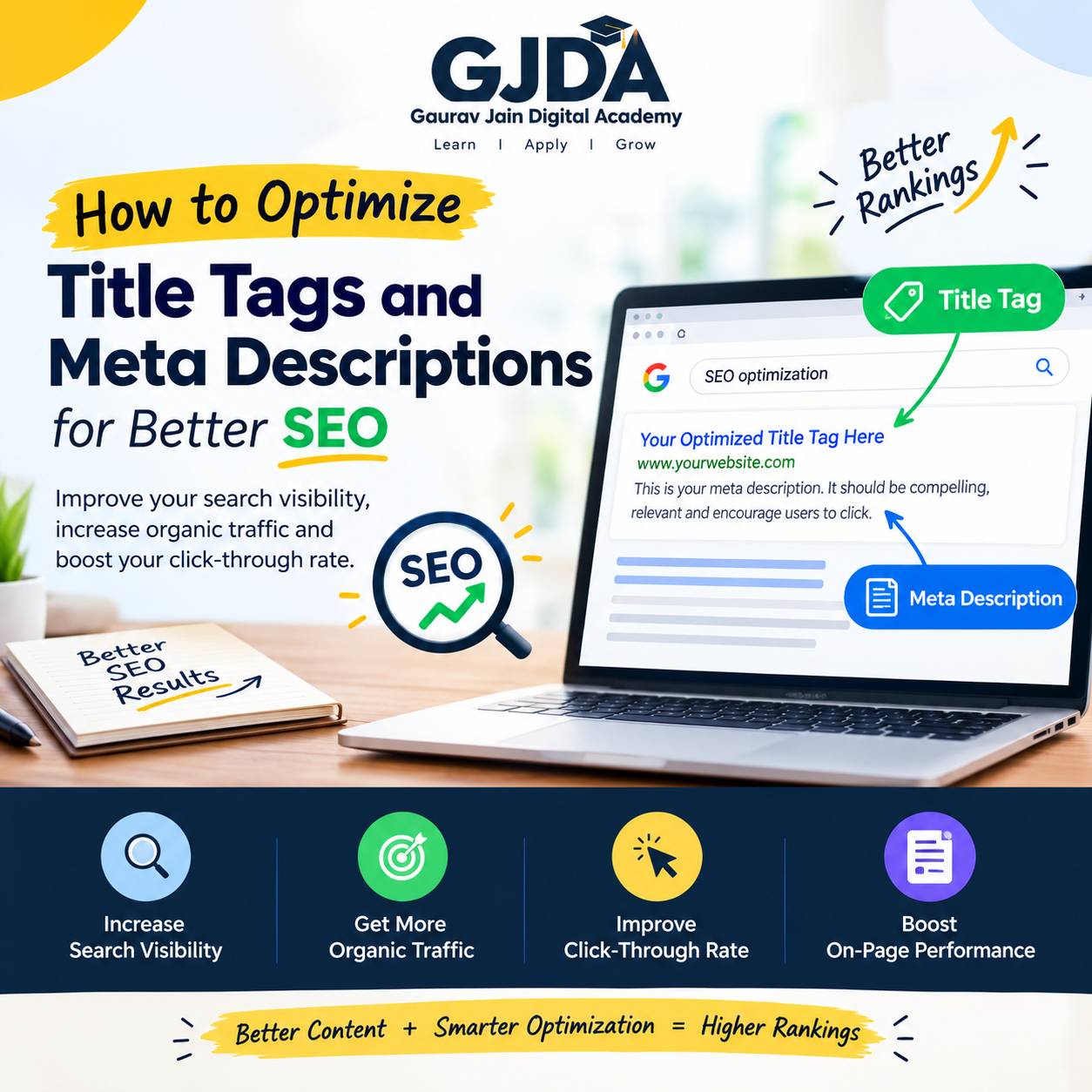
- On-page local signals — city and locality names used naturally in your website's title tags, headings, and content.
- Reviews — both the number of them and, more than people realise, how you respond to the bad ones.
- Backlinks from local sources — a mention from the local chamber of commerce or a nearby college website carries real weight.
Before touching any of this, though, it helps to know what's actually broken on the website first — sometimes a slow-loading site or broken mobile layout is quietly cancelling out everything else you do. A proper technical review, like the one covered in this technical SEO audit guide, is worth doing before you spend a single rupee on local listings.
The real-world example — a dental clinic in Meerut
The client was a two-doctor dental clinic near Shastri Nagar. Decent equipment, good doctors, but their Google Business Profile hadn't been touched in over a year. Nine reviews. No photos beyond a blurry exterior shot. Wrong phone number listed — an old landline nobody answered anymore.
We started in month one with the basics: fixed the NAP (name, address, phone) everywhere it appeared online, added twenty-two real photos of the clinic, waiting area, and equipment, corrected the business category from "Doctor" to the more specific "Dental Clinic," and set up a simple weekly posting habit — one photo, one short update, nothing fancy.
By month two, we tackled reviews properly. Not by buying fake ones — I don't do that, and honestly, Google catches most of it eventually and the penalty isn't worth the shortcut. Instead, we trained the front desk staff to simply ask happy patients for a review after a good visit, and gave them a printed QR code linking straight to the review page. Reviews went from 9 to 41 in about ten weeks.
By month four, we added service-specific pages — root canal, teeth whitening, braces — each with locality mentions written naturally, not stuffed. Table below shows what changed over five months.
| Metric | Before | After 5 Months |
|---|---|---|
| Google Business Profile views | ~180/month | 1,650/month |
| Calls from Google listing | 6/month | 48/month |
| Reviews | 9 | 63 |
| Ranking for "dentist near me" (in target area) | Not in top 20 | Position 2–3 |
New patient bookings roughly tripled in that window, though I'll be honest — some of that also came from a referral push the clinic ran on their own, so I won't pretend the SEO work alone did all of it. That's usually how it goes in real projects. Multiple things move together, and untangling exactly which channel gets full credit is harder than case studies like to admit.
For a broader look at how this plays out across different types of local businesses, not just healthcare, this digital marketing case study for a local business covers a retail example with a slightly different set of moving parts.
Benefits worth knowing
The obvious one is more calls and walk-ins. But a few benefits get overlooked. Local SEO is cheaper per lead than most paid ads once it's built up — the clinic above now gets calls that would have cost them roughly 150–200 rupees each on Google Ads, for free, month after month. It also builds trust before the customer even walks in; a business with 60 genuine reviews and a 4.6 rating simply looks more credible than one with none. And unlike a paid campaign, the work compounds. Stop paid ads and the leads stop the next day. Stop actively working on Local SEO and the results decay slowly, not instantly.
Challenges nobody warns you about
It's slow in the beginning. The dental clinic saw barely anything change in the first three weeks, and that gap between effort and result is exactly where most business owners give up. Fake reviews from competitors are another real problem — one bakery client of mine got hit with a string of one-star reviews from a rival, and disputing them with Google took nearly a month.
Multi-location businesses have it harder still — duplicate listings, inconsistent NAP data across branches, and the temptation to create a new listing for every branch instead of managing them properly. That one, honestly, "it depends" on the business structure — there's no single clean rule that fits every multi-branch case.
Common mistakes I see in almost every batch
Duplicate Google Business listings top the list — usually created accidentally when the business moved location or changed hands. Keyword stuffing city names into every sentence is another; Google's algorithms are sharp enough now to read that as manipulation rather than relevance. Ignoring negative reviews instead of responding calmly and professionally. Using a virtual office address for the Business Profile, which technically violates Google's guidelines and can get a listing suspended without warning. And the most common one of all — treating the Google Business Profile as a one-time setup task instead of something that needs weekly attention.
Best practices that actually move the needle
- Claim and fully verify your Google Business Profile before doing anything else — an unverified listing barely ranks.
- Keep your NAP identical everywhere, down to the abbreviation style (Road vs Rd).
- Ask for reviews consistently, right after a positive interaction, not months later.
- Add fresh photos monthly — profiles with recent photos get noticeably more clicks in my experience.
- Build a handful of genuinely relevant local citations rather than a hundred low-quality ones.
Useful tools for local SEO work
| Tool | What it's good for |
|---|---|
| Google Business Profile Manager | Core listing management, posts, insights |
| Google Search Console | Tracking which local queries actually bring traffic |
| BrightLocal or Whitespark | Citation building and rank tracking by location |
| Canva | Quick, decent photos and Business Profile post graphics |
| PageSpeed Insights | Checking site speed, which quietly affects local rankings too |
Career opportunities in Local SEO
This is one of the more practical entry points into digital marketing right now, because almost every small business in India needs it and almost none of them are doing it well. Local SEO specialists, freelancers managing five or six shop-owner clients at once, and agencies that focus purely on local businesses — all of these are viable paths. If you're figuring out what to actually charge for this kind of work, this guide on pricing digital marketing services is worth reading before you quote your first client.
And if you're just starting out and don't yet have a client to practice on, this piece on landing your first digital marketing client lays out a realistic approach — local shop owners are often the easiest first clients precisely because so few of them have had this done properly before.
Students preparing for interviews in this field also tend to get asked local SEO scenarios more than they expect — worth glancing through these digital marketing interview questions and answers before you walk into one.
Practical assignment
Pick any small business near your own home — a salon, a tuition centre, a small clinic, anything. Search for it on Google as if you were a customer. Note down: is the listing claimed? How many reviews, and how recent is the latest one? Are the photos current? Is the category correct? Write a one-page audit exactly like you would hand to a real client, with three fixes ranked by priority. This single exercise, done properly, teaches more than a week of reading articles.
Frequently Asked Questions
1. How long does Local SEO take to show results?
Usually 3 to 6 months for meaningful movement, though a poorly optimised profile can show quick early gains just from basic fixes.
2. Do I need a website for Local SEO to work?
It helps a lot, but a well-optimised Google Business Profile alone can generate real calls even without one — the dental clinic's early gains came almost entirely from the listing itself.
3. Is it okay to buy Google reviews?
No. It violates Google's policies and the risk of a suspended listing far outweighs the short-term boost.
4. What's the single most important ranking factor for local search?
There isn't one single factor — it's really a mix of proximity, relevance, and prominence, and the weight of each shifts depending on the search itself.
5. How many reviews are "enough"?
There's no fixed number, but businesses with 40+ recent, genuine reviews tend to noticeably outperform those with under 10 in the same category.
6. Can a business have multiple Google Business Profiles?
Only if it has genuinely separate physical locations. Multiple listings for one location get suspended, sometimes without much warning.
7. Does responding to reviews actually affect rankings?
It's debated among practitioners, but it certainly affects conversion — people reading reviews notice whether a business responds, especially to negative ones.
8. What's a local citation?
Any online mention of your business name, address, and phone number — directories, local news mentions, industry listings — that helps confirm your business's existence and location to search engines.
9. Is Local SEO different from regular SEO?
The core principles overlap, but Local SEO adds location-specific signals — Business Profile, citations, proximity — that regular SEO for a national or global site doesn't need to worry about as much.
10. Can a small business do Local SEO without hiring an agency?
Yes, especially the basics — claiming the listing, adding photos, asking for reviews. It just takes consistent time, which is the part most owners underestimate.
11. How much should a small business budget for Local SEO?
It varies quite a bit by city and competition, but for most small local businesses, a modest monthly effort focused on consistency beats a large one-time spend.
Conclusion
Local SEO isn't complicated in theory. Claim your listing, keep your details consistent, collect real reviews, post regularly, fix what's broken on your website. What's hard is doing it consistently for months without seeing much movement in week two or three — that's where most people quit, right before it usually starts working.
If you want to actually learn this properly, hands-on, with real client-style projects instead of just theory, our Professional SEO Training covers local SEO in depth alongside the rest of search optimisation. If you're newer to digital marketing altogether, it's worth starting with the beginner's course curriculum first to build the foundation before specialising. And if you'd simply like to know more about how we teach and who we are, you're welcome to look through our institute's page directly.