Master Google Ads to Create, Optimize, and Scale High-Performing PPC Campaigns
8 Articles
 Sep 07, 2026
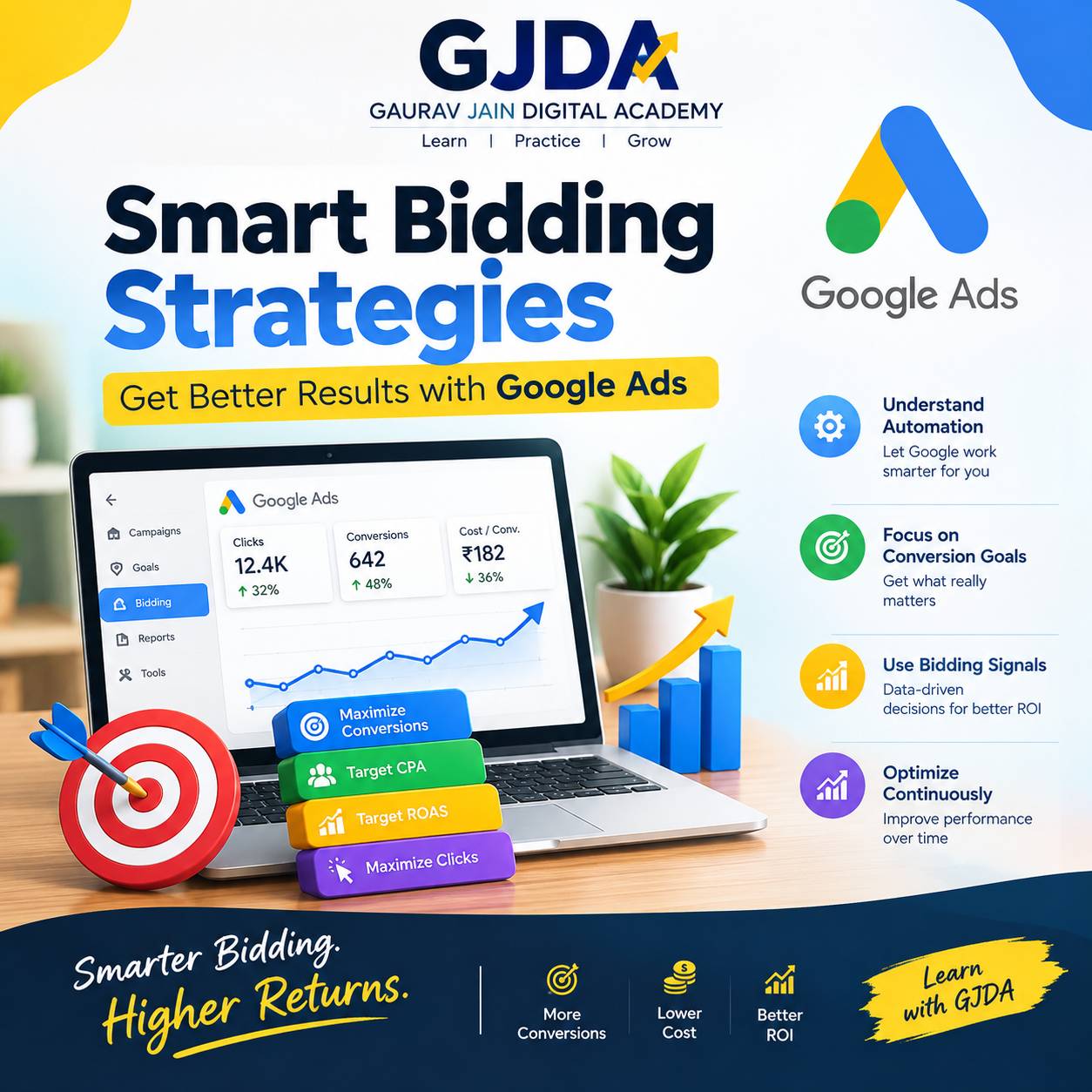
Smart Bidding Strategies to Improve Google Ads Performance
Learn smart bidding strategies for Google Ads, including automation, conversion goals, bidding signals, and optimization techniques to improve campaign results.
 Sep 07, 2026
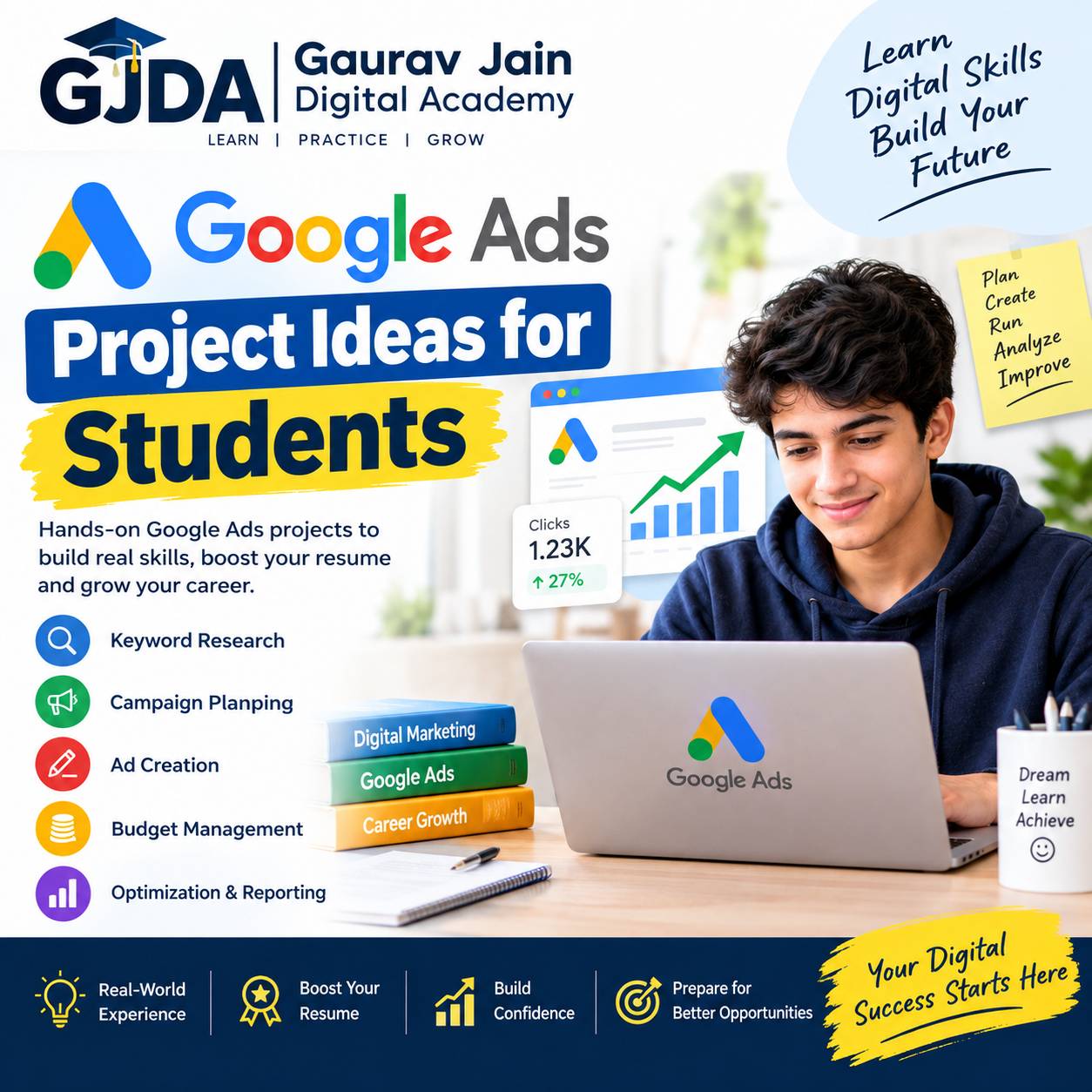
Best Google Ads Project Ideas for Students to Build Skills
Explore practical Google Ads project ideas for students, including campaign planning, keyword research, ad creation, budgeting, optimization, and reporting.
 Aug 17, 2026
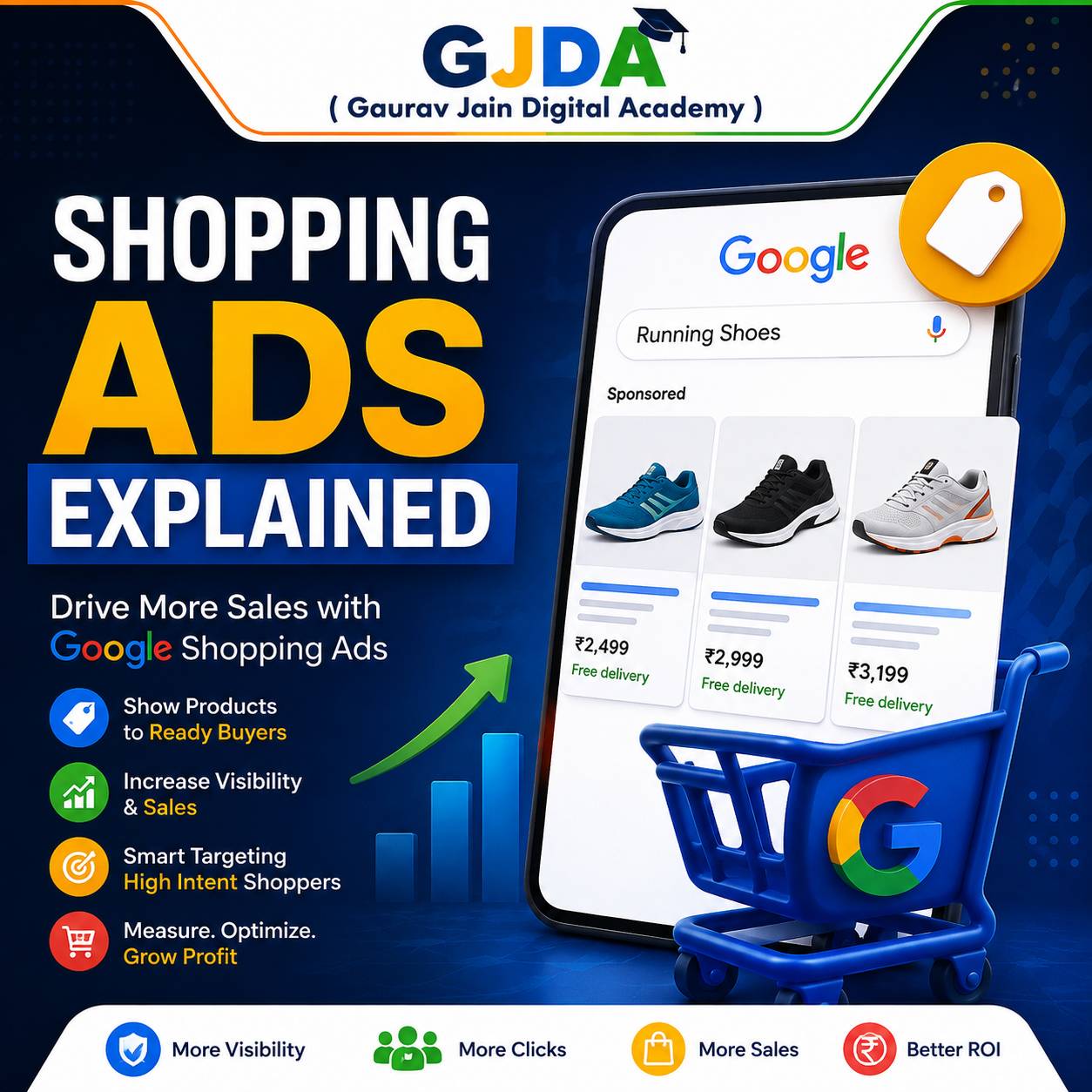
How Google Shopping Ads Work: A Practical Guide for Marketers
Learn how Google Shopping Ads work, including product listings, campaign types, bidding, targeting, optimization, costs, and practical strategies for better results.
 Aug 16, 2026
AI-Powered Competitor Analysis for Smarter Marketing Strategy
Learn how AI for competitor research helps marketers analyze rivals, uncover market trends, track strategies, and make smarter data-driven decisions better.
 Aug 04, 2026
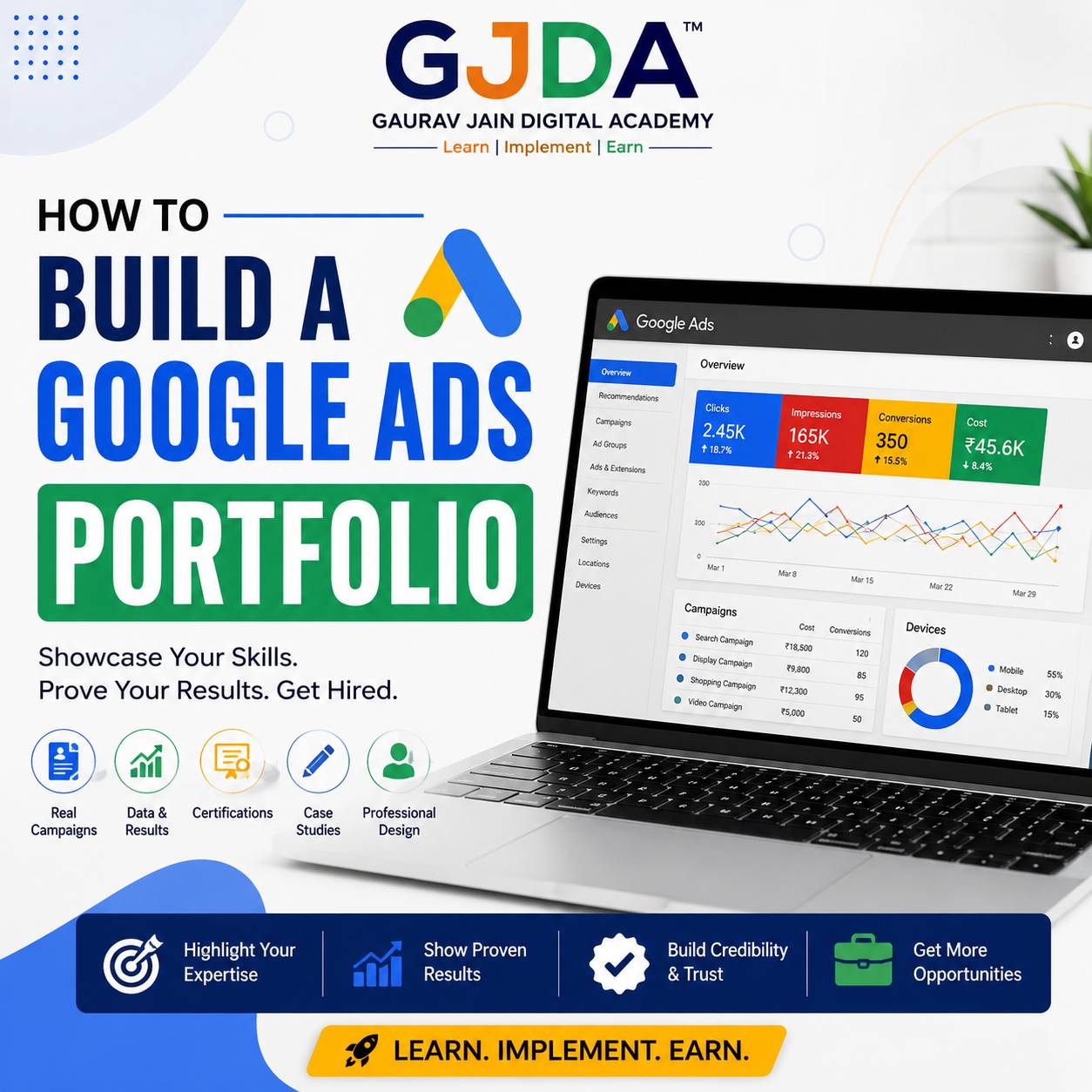
Build a Professional Google Ads Portfolio That Demonstrates Real Skills and Measurable Results
Learn how to build a Google Ads portfolio with real campaign examples, certifications, case studies, and proven strategies to impress employers.
 Aug 04, 2026
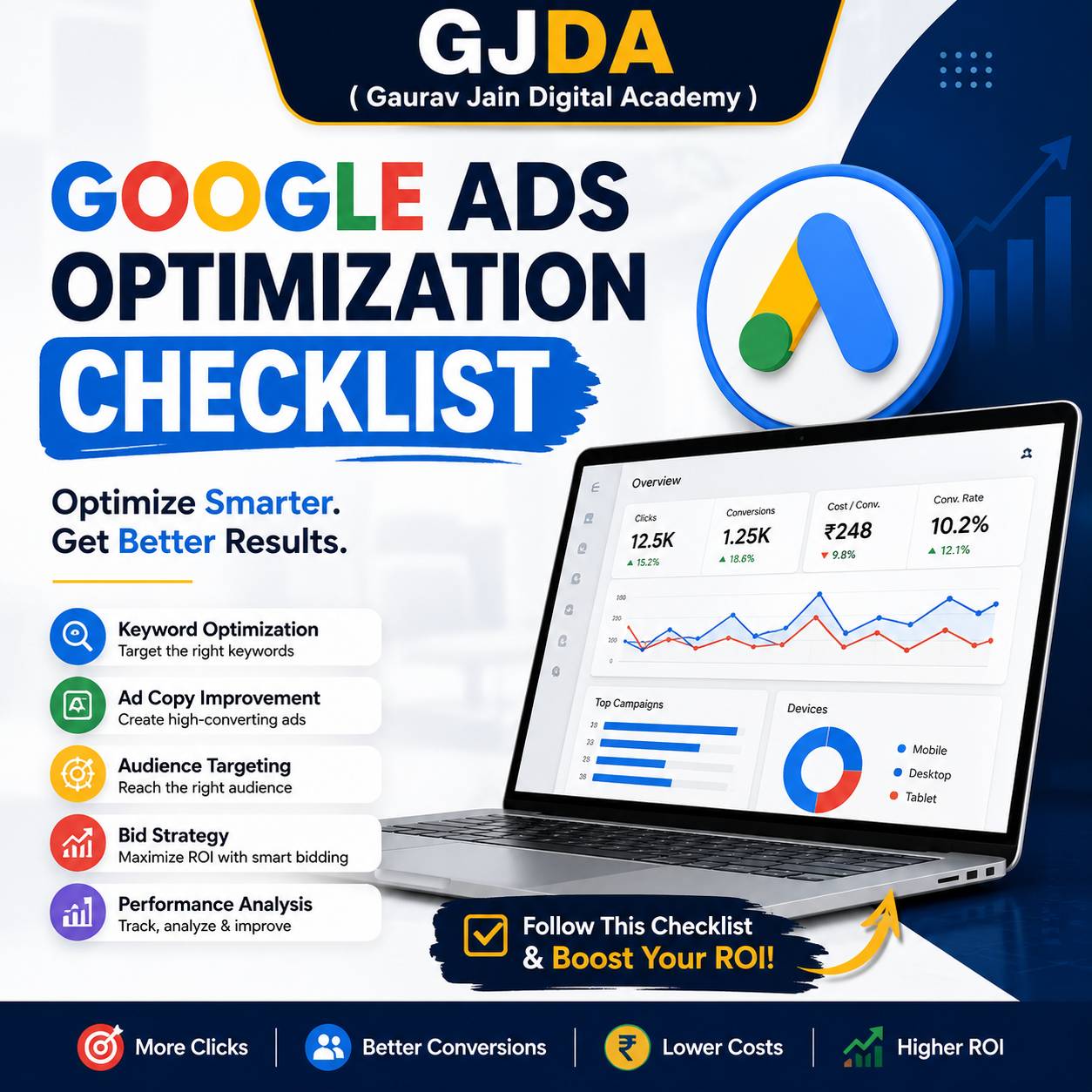
Complete Google Ads Optimization Checklist to Improve ROI, Reduce CPC, and Increase Conversions
Use this Google Ads optimization checklist to improve campaign performance, increase conversions, lower CPC, and maximize ROI with proven best practices.
 Aug 03, 2026
Google Ads Interview Questions with Expert Answers for Freshers and Experienced Professionals
Prepare for your next interview with the most asked Google Ads interview questions, expert answers, practical examples, and tips for beginners and professionals.
 Aug 03, 2026
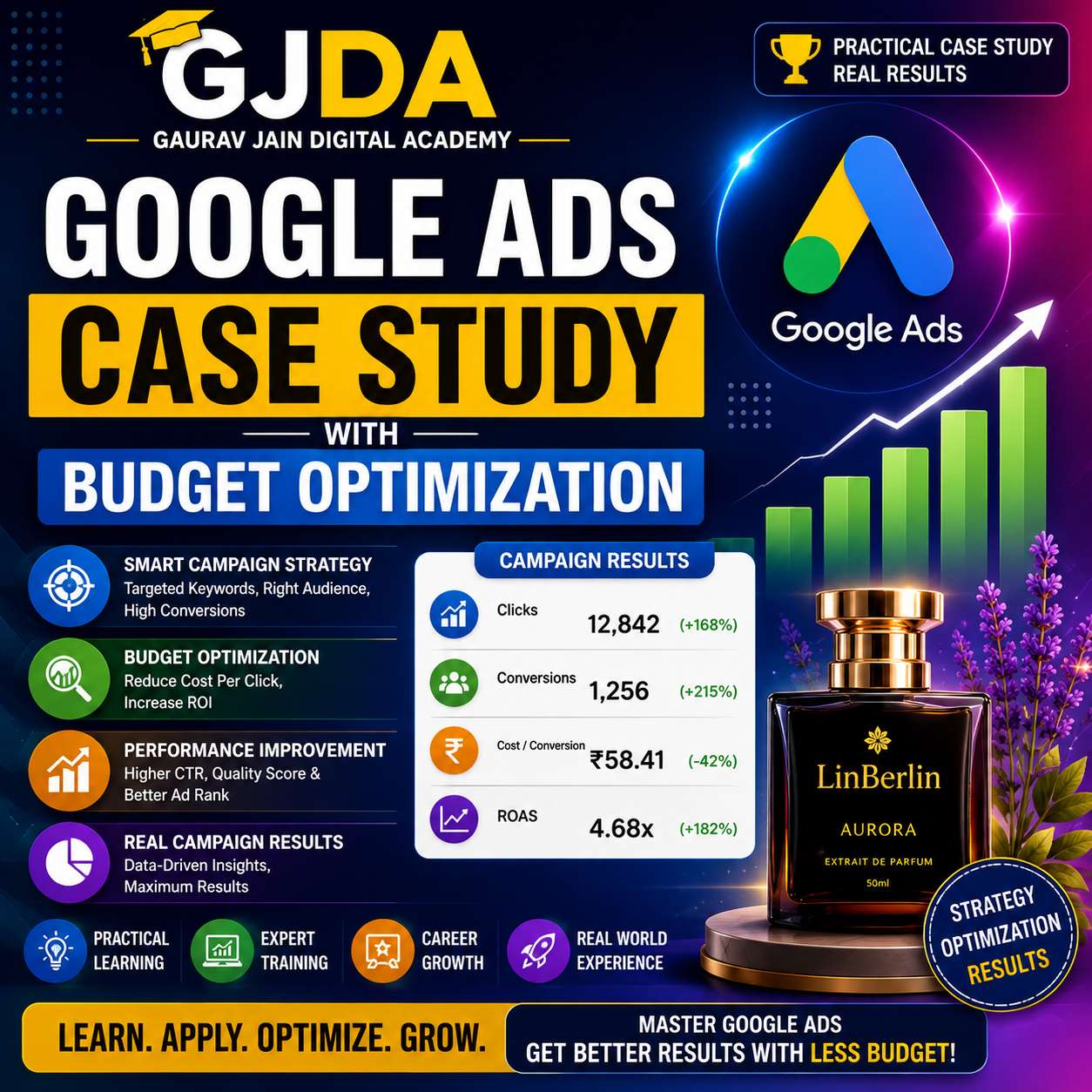
Google Ads Case Study with Budget Optimization: Real Campaign Strategies and Measurable Results
Discover a real Google Ads case study with budget optimization strategies, campaign improvements, lower CPC, higher ROI, and practical insights for better results.
A client running a home renovation business was spending ₹60,000 a month on Google Ads and getting almost nothing from it — high impressions, decent clicks, barely any calls. Turned out the entire budget was going into broad match keywords triggering searches like "home renovation shows" and "renovation ideas Pinterest," none of which had any buying intent. One afternoon of match type cleanup and negative keyword additions cut wasted spend by roughly 40% and doubled qualified calls within three weeks. Same budget. Completely different result. That's Google Ads in a sentence — the platform rewards precision and punishes assumptions.
This page covers the platform end to end — campaign types, bidding, Quality Score, the AI-driven changes over the past few years, and the mistakes that quietly drain budgets like the one above.
What Is Google Ads?
Google Ads is Google's advertising platform where businesses bid to show ads across Search results, YouTube, the Display Network, Shopping listings, and Google's various apps — you pay per click, per impression, or per conversion depending on the campaign type, and you're competing against other advertisers targeting the same audience through an auction that happens in real time, every single search.
What makes it different from most advertising is intent. Someone searching "emergency plumber near me" isn't browsing — they're actively trying to solve a problem right now, often within minutes of clicking. That's a fundamentally different moment to advertise into compared to someone scrolling Instagram, and it's why Search campaigns specifically tend to convert at much higher rates than most social advertising, category by category.
Why It Matters
Here's the honest version — Google Ads matters because it's often the fastest path to revenue for a new or existing business, faster than SEO (which takes months), faster than building an organic social following. You can launch a campaign today and get your first click within hours. That speed comes at a cost, obviously; you're paying for every visitor rather than earning them for free, which is why most serious advertisers eventually run Google Ads alongside SEO rather than instead of it.
It also matters because of how granular the targeting and measurement have become. You can know, almost to the rupee, what a customer cost you and what they were worth — something traditional advertising never offered. That level of accountability is either the platform's biggest strength or its most stressful feature, depending on how comfortable you are with numbers staring back at you daily.
How Google Ads Actually Works
Every campaign sits inside an account structure — Account, then Campaigns, then Ad Groups, then individual ads and keywords within those groups. Getting this structure right matters more than beginners expect; a poorly organized account with mismatched keywords and ad copy across generic ad groups tanks Quality Score and inflates cost per click, sometimes dramatically.
| Campaign Type | Where It Shows | Best For |
|---|---|---|
| Search | Google search results | High-intent keyword-based targeting |
| Display | Websites and apps across the Display Network | Brand awareness, remarketing at scale |
| Shopping | Google Shopping results and search | Physical products with clear pricing |
| Video (YouTube) | YouTube and video partner sites | Brand storytelling, awareness campaigns |
| Performance Max | All Google inventory combined via AI optimization | Advertisers wanting broad reach with less manual control |
| Demand Gen | YouTube, Discover, Gmail feeds | Visual, discovery-stage engagement |
| App | App stores, search, YouTube, Display | App installs and in-app actions |
| Local | Search, Maps, Display for local businesses | Driving store visits and local calls |
Quality Score — Google's rating of how relevant your keyword, ad, and landing page are to each other — directly affects both your cost per click and your ad position. A higher Quality Score genuinely lowers what you pay for the same position; this isn't a minor technicality, it's often the single biggest lever advertisers ignore while obsessing over bid amounts instead.
Match types decide how closely a search has to resemble your keyword before your ad triggers. Broad match casts the widest net and is where most wasted spend hides for beginners. Phrase match requires the core meaning to be present. Exact match is the tightest, showing ads only for close variations of the exact term. Google's own automation has pushed broad match harder in recent years because it feeds their machine learning better, which is worth knowing — the platform's recommendations aren't always purely aligned with your lowest cost per acquisition.
A Real-World Example
A B2B software company selling inventory management tools was running a single broad Search campaign lumping together all their features under generic ad groups. Cost per lead sat around ₹2,800, and sales complained the leads were low quality — people searching "free inventory software" or "inventory management definition," not people ready to buy.
Restructuring into tightly themed ad groups (one specifically for "inventory management software for small business," another for "warehouse inventory system," each with matched ad copy and dedicated landing pages) alongside a solid negative keyword list to filter out research-stage and free-tool searches brought cost per lead down to roughly ₹1,400 within six weeks, and sales-qualified lead rate nearly doubled. Nothing about the product changed. The account structure and targeting precision did.
Benefits of Google Ads
- Immediate visibility — unlike SEO, you can appear at the top of search results the same day you launch a campaign.
- Precise budget control, with daily and campaign-level spend caps that let you scale gradually rather than committing large amounts upfront.
- Detailed conversion tracking connecting ad spend directly to revenue, when set up correctly through Google Tag Manager and Analytics.
Challenges
Costs per click have risen substantially in competitive industries over the past several years — legal, insurance, and certain e-commerce categories can run ₹200-500+ per click, which makes profitability a real math problem, not a given. Small budgets in expensive categories sometimes simply can't generate enough data or volume to work well, and that's a genuine limitation worth acknowledging rather than pretending every budget size succeeds equally.
Google's automation, particularly Performance Max, trades transparency for convenience — you get less visibility into exactly which placements or audiences are driving results, which frustrates advertisers used to granular manual control. It often performs well on pure numbers. It also makes debugging a struggling campaign genuinely harder, since you can't isolate exactly what's underperforming the way you could in a traditional Search campaign.
Ad fatigue and rising competition mean strategies that worked well eighteen months ago frequently need revisiting — an account left on autopilot tends to drift toward inefficiency as competitors adjust bids and Google's algorithm shifts its own recommendations.
Common Mistakes
- Running broad match keywords without a solid negative keyword list, letting irrelevant searches burn through budget silently.
- Sending ad traffic to a generic homepage instead of a dedicated landing page matching the ad's specific offer and keyword intent.
- Setting a campaign live without proper conversion tracking configured, then trying to judge performance based on clicks alone rather than actual results.
- Ignoring Quality Score and wondering why cost per click sits higher than competitors bidding on the same terms.
- Turning on Performance Max immediately without first understanding what's working in more granular campaign types — this makes it much harder to diagnose issues later since Performance Max offers limited breakdown data.
Best Practices
Build tightly themed ad groups around specific keyword clusters, with ad copy that mirrors the exact language a searcher used. Relevance drives Quality Score, and Quality Score drives cost efficiency — this connection is worth internalizing early rather than treating bidding as the only lever that matters.
Set up conversion tracking and Google Tag Manager before launching, not after. Judging campaign success without proper tracking is close to guessing, however confident the click-through-rate numbers look on the surface.
Write at least three to five responsive search ad headline variations per ad group and let Google's testing surface what resonates, but review performance data regularly rather than assuming the algorithm always knows best — sometimes it favors a headline with a higher click rate that converts worse, and only a human checking conversion data downstream catches that.
Review search term reports weekly in the early weeks of a new campaign. This is where wasted spend hides, and catching it early saves real money before it compounds over a full month.
Useful Tools for Google Ads
| Category | Tools |
|---|---|
| Tracking & analytics | Google Tag Manager, Google Analytics 4 |
| Keyword research | Google Keyword Planner, SEMrush |
| Landing page building | Unbounce, WordPress with page builders |
| Bid & budget management | Google Ads' native Smart Bidding, Optmyzr for advanced automation rules |
| Ad copy assistance | Claude or ChatGPT for headline and description variations |
Career Opportunities in Google Ads
PPC specialist roles remain consistently in demand across agencies and in-house marketing teams, and Google Ads specifically tends to be the most requested platform certification in job postings for paid media roles. It's also one of the more freelance-friendly digital marketing skills — a freelancer managing three or four client accounts, each showing measurable ROI, can build a stable income faster than in a lot of other marketing specializations, largely because the results are so directly attributable to the work.
Agency-side, Google Ads management is often a core service offering, and Google's own Partner program (requiring certain spend and certification thresholds) gives credibility that helps agencies win client trust. Earning potential varies by client portfolio size and specialization, and the biggest jump in rates typically comes from demonstrable case studies rather than years of experience alone — a specific, verifiable cost-per-lead improvement speaks louder in a sales conversation than a resume line.
If you want structured, hands-on training instead of learning the platform's quirks through expensive trial and error, our Google Ads Training Course covers campaign structure, bidding strategy, conversion tracking, and the newer AI-driven campaign types with real account practice.
Practical Assignment
Pick a business you're familiar with, or a hypothetical one. Using Google's free Keyword Planner, research ten keywords relevant to that business and note their approximate search volume and competition level. Group them into two or three tightly themed ad groups based on intent (informational versus ready-to-buy searches), and write one ad headline and description for each group matching that specific intent. This exercise builds the core skill the entire platform rewards — thinking in intent clusters rather than a flat keyword list.
Frequently Asked Questions
How much does Google Ads cost to get started?
There's no minimum platform fee — you set your own daily budget, and many advertisers start testing with as little as ₹500-1,000 a day, though competitive industries may need higher budgets to gather enough data for the algorithm to optimize effectively.
What's the difference between Google Ads and SEO?
Google Ads gets you immediate, paid visibility that stops the moment you stop paying. SEO builds organic visibility that compounds over time but takes months to show results. Most mature businesses run both rather than choosing one over the other.
What is Quality Score and why does it matter?
It's Google's rating of how relevant your keyword, ad copy, and landing page are to each other, scored on a scale that directly influences your cost per click and ad position — a higher score genuinely lowers what you pay for the same visibility.
Is Performance Max better than traditional Search campaigns?
It depends on your goals — Performance Max often performs well on raw conversion numbers due to its access to all Google inventory and AI optimization, but it offers far less visibility into what's actually driving results compared to a well-structured Search campaign.
How long before Google Ads starts showing results?
Traffic and clicks can start within hours of launching a campaign. Meaningful optimization and stable performance data typically take two to four weeks as the algorithm gathers enough conversion data to optimize bidding effectively.
Do I need a website to run Google Ads?
For most campaign types, yes — you need a landing page to send traffic to. Some campaign types like Call-only ads or Local campaigns focused on store visits have more flexibility, but a proper landing page significantly improves conversion for almost every campaign type.
What's a good click-through rate for Google Ads?
It varies significantly by industry and campaign type, but Search campaigns often see healthy click-through rates in the 3-6% range for well-targeted keywords, while Display and Video campaigns typically run much lower given their broader, less intent-driven audiences.
Can small businesses compete with big brands on Google Ads?
Yes, particularly with tightly targeted local or niche keywords where big brands often bid less specifically — a small business focusing on precise, high-intent long-tail keywords can often achieve better cost efficiency than a broad-targeting large competitor.
What certifications are worth getting for Google Ads?
Google's own free certifications (Search, Display, Shopping, Measurement) through Google Skillshop are the most directly relevant and recognized credentials, since they're tied to the actual platform employers and clients use.
How much can a Google Ads specialist earn?
It varies widely based on whether you're employed or freelancing, client portfolio size, and specialization, and the strongest earners typically have verifiable case studies showing specific, measurable campaign improvements rather than general experience alone.
Google Ads rewards precision over guesswork, and the advertisers who struggle are almost always the ones who set a campaign live and leave it running without checking search terms, Quality Score, or conversion data regularly. Check the related reads below on SEO, conversion rate optimization, and landing page design for the pieces that make a Google Ads campaign actually convert once the click lands, and if you'd rather learn this hands-on with real account practice instead of piecing it together from Google's own documentation, our Google Ads Training Course is built around exactly this roadmap.