Learn Amazon Selling from Beginner to Advanced with Proven Strategies to Build a Profitable Business
3 Articles
 Sep 07, 2026
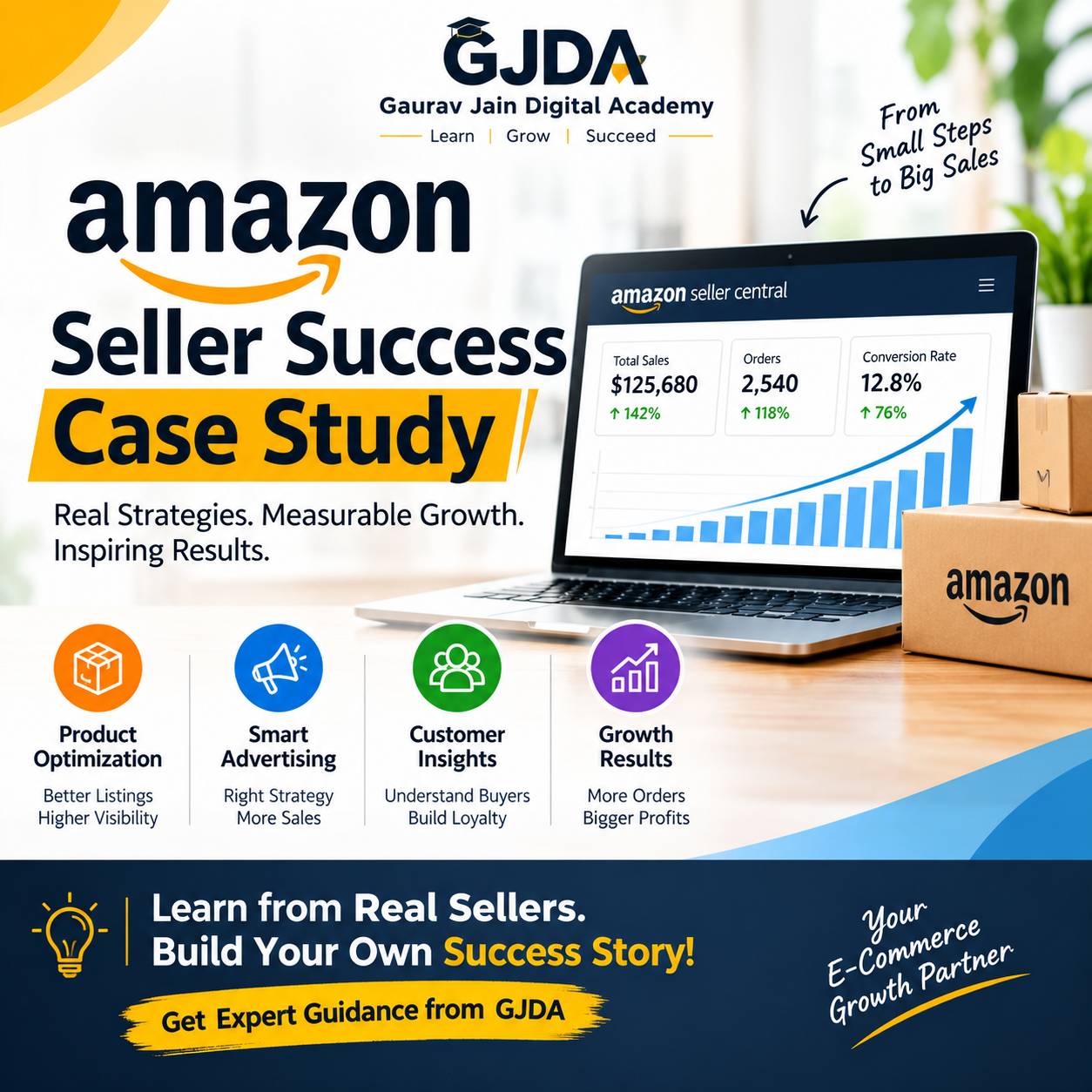
How an Amazon Seller Achieved Growth: Success Case Study
Explore an Amazon seller success case study with proven strategies, product optimization, advertising, customer insights, and measurable growth results.
 Aug 12, 2026
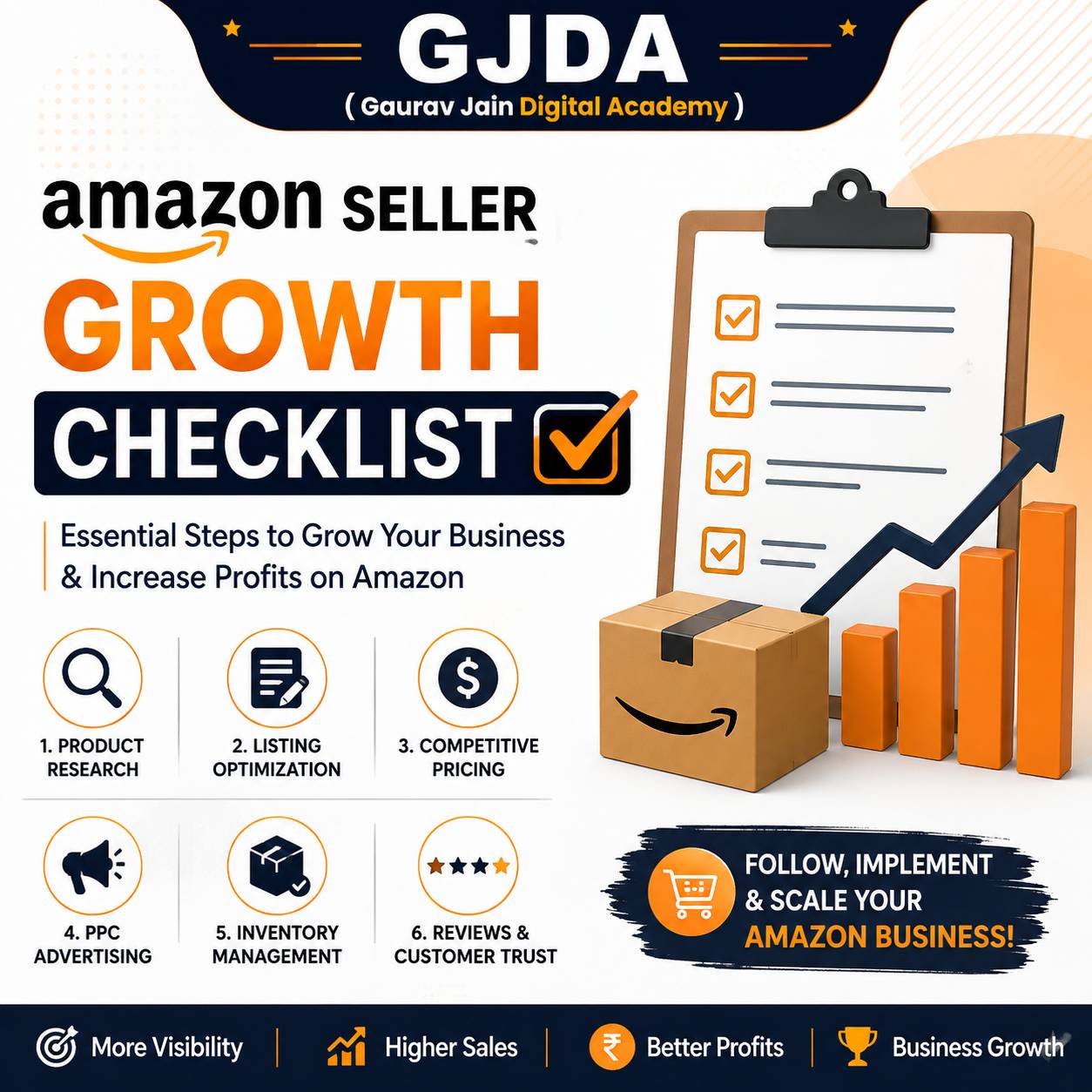
Amazon Seller Growth Checklist for Sustainable Business Growth
Use this Amazon Seller Growth Checklist to improve listings, pricing, advertising, inventory, reviews, and conversions for sustainable seller growth on Amazon.
 Aug 09, 2026
Amazon Seller Interview Questions and Answers for Professionals
Prepare for Amazon Seller interviews with expert questions and answers covering Seller Central, product listings, FBA, PPC, sales, account health, and growth.
A friend of ours started selling kitchen organizers on Amazon in 2022 with ₹40,000 and zero prior experience. Eighteen months later she was doing roughly ₹8 lakh a month in revenue, and she'll be the first to tell you the first four months were mostly confusion, a rejected brand registry application, and one very expensive inventory mistake she still brings up unprompted. That's the honest version of Amazon selling — not the "quit your job in 90 days" version that gets pushed around YouTube.
This page is the long version. If you're deciding whether to start, or you've started and you're stuck somewhere between listing your first product and actually turning a profit, this covers it.
What Is Amazon Selling?
Selling on Amazon means listing products through Amazon's Seller Central platform and using its marketplace — and often its fulfillment infrastructure — to reach customers who are already searching to buy. You're not building a store from scratch and hoping people find it. You're plugging into traffic that already exists, which is exactly why it's crowded, and exactly why the margins get thin fast if you don't know what you're doing.
There are a few distinct business models under this umbrella, and mixing them up is one of the first mistakes new sellers make.
- Private label — you source a generic product, brand it as your own, and build a listing around it. Highest control, highest upfront cost, and the model most training courses (including ours) focus on because it builds a sellable, defensible business.
- Wholesale — you buy established branded products in bulk from distributors and resell them. Lower creative control, but faster to start since there's no product development.
- Dropshipping — technically possible but heavily restricted under Amazon's policies, and honestly not something we'd recommend building a business on right now. Account suspensions in this category are common, and Amazon has tightened enforcement significantly over the past two years.
Why It Matters
Amazon accounted for roughly 38% of US e-commerce sales in recent years, and its share in markets like India continues climbing as more first-time online shoppers default to it out of trust in delivery and returns. That trust is the actual product you're renting when you sell here — customers buy from Amazon, not really from you, and that changes everything about how you market.
Realistically, the barrier to entry has dropped a lot since 2015. Back then you needed serious capital and manufacturing relationships. Now a first-time seller can launch with a few hundred dollars, source through Alibaba, and use FBA to handle storage and shipping without ever touching inventory personally. The barrier that's gone up instead is competition — and increasingly, AI-assisted competitor research means everyone's watching everyone's pricing in near real-time.
How Amazon Selling Actually Works
You register a Seller Central account (Individual or Professional plan — Professional makes sense past about 40 units a month, since the flat $39.99/month fee beats the $0.99 per-item fee quickly). Then you list a product, choose a fulfillment method, and Amazon's algorithm — commonly referred to as A9, though it's evolved considerably and is sometimes called A10 in seller communities — decides how visible your listing is in search results based on relevance and performance signals.
That algorithm cares about a few things more than anything else: keyword relevance in your title and backend search terms, conversion rate (how many people who see your listing actually buy), sales velocity, and review quality. It doesn't care how good your product photos look in isolation — it cares whether those photos convert clicks into sales, which is a subtly different thing.
| Fulfillment Method | Who Handles Storage & Shipping | Best For |
|---|---|---|
| FBA (Fulfillment by Amazon) | Amazon warehouses, packs, ships, handles returns | Sellers wanting Prime eligibility and hands-off logistics |
| FBM (Fulfillment by Merchant) | You or your team pack and ship directly | Larger or fragile items, sellers wanting more control over cost |
Most beginners start FBA. It's simpler and Prime badge visibility genuinely does lift conversion rates — we've seen it add 10-20% in split comparisons on similar listings. FBM makes more sense once you're selling bulky items where Amazon's storage fees eat too much of your margin, or you already have fulfillment infrastructure from another channel.
A Real-World Example
Take a private label seller in the yoga accessories niche. Product research using a tool like Helium 10 showed "yoga mat towel" had solid search volume with moderate competition — not the oversaturated "yoga mat" keyword everyone fights over. They sourced a private label version, invested in professional photography (roughly $300 for a full listing shoot), and launched with a Sponsored Products campaign at $15/day targeting exact-match keywords from their research.
First month: 40 units sold, break-even after ad spend. Not glamorous. By month four, organic ranking had climbed enough that ad spend as a percentage of sales (ACOS) dropped from 45% to around 18%, and they were profitable at roughly ₹1.2 lakh net per month. The lesson buried in there — it wasn't the product that changed, it was patience plus consistent review generation plus the algorithm slowly trusting the listing more as sales velocity built.
Benefits of Selling on Amazon
- Built-in traffic — you're not paying to educate the market that your product category exists, people are already searching for it.
- FBA logistics remove the single biggest operational headache of e-commerce: packing, shipping, and customer returns handling.
- Brand Registry, once approved, unlocks A+ Content, Sponsored Brands ads, and stronger protection against listing hijacking — this alone is worth pursuing early if you're going private label.
Challenges — the Part Most Guides Skip
Amazon's fee structure eats more than new sellers expect. Between referral fees (typically 8-15% depending on category), FBA fulfillment fees, and storage fees, it's common for a product priced at $25 to only net $6-8 in actual profit before ad spend. Run the numbers before you order inventory, not after.
The Buy Box — the "Add to Cart" button on a listing — isn't guaranteed even if you're the only seller of your exact product. Price, fulfillment method, account health, and shipping speed all factor into who wins it, and losing it means your sales can drop close to zero overnight even with an otherwise healthy listing.
Account suspensions happen, and they happen to sellers doing nothing obviously wrong — a policy violation flagged by an automated system, a string of returns triggering a review, an IP complaint from a competitor. It's stressful, it's opaque, and Amazon's appeal process can take weeks. Build some cash buffer assuming this might happen at some point; most active sellers eventually deal with a suspension scare.
Common Mistakes New Sellers Make
- Ordering too much inventory on the first product before validating demand — we've seen sellers sink their entire budget into 1,000 units of something that sold 30 in the first month.
- Ignoring backend search terms and relying only on the visible title for keyword coverage.
- Racing to the bottom on price instead of competing on listing quality, reviews, and differentiation.
- Skipping GST registration and proper invoicing in markets like India where it's legally required for most seller categories — this creates real compliance headaches later, not just a minor paperwork gap.
- Buying fake reviews or incentivizing them outside Amazon's Vine program. This gets accounts suspended, period, and it's not worth the shortcut.
Best Practices That Hold Up Over Time
Do keyword research before you source the product, not after. Knowing that "collapsible water bottle" outsells "foldable water bottle" three-to-one in search volume should influence what you call the product, not just how you tag it later.
Photography matters more than most sellers budget for. A listing with seven images including lifestyle shots and infographics converts meaningfully better than one with three plain product-on-white images. This is one of the cheapest, highest-ROI investments you can make early.
Run Sponsored Products from day one, even at a small daily budget. Organic ranking on Amazon is partly a function of sales velocity, and ads are the fastest legitimate way to generate that early velocity while your organic ranking is still building.
Ask for reviews through Amazon's built-in "Request a Review" button — it's compliant, it's simple, and it's genuinely underused. Don't chase reviews through outside incentives; it's not worth the risk to your account.
Useful Tools for Amazon Sellers
| Category | Tools Worth Testing |
|---|---|
| Product & keyword research | Helium 10, Jungle Scout |
| Listing optimization / AI copy | Helium 10's Listing Builder, Claude or ChatGPT for draft bullet points |
| Advertising management | Amazon's own Campaign Manager, Perpetua for automated bid rules |
| Inventory & profit tracking | InventoryLab, SellerApp |
| Review & feedback management | FeedbackWhiz |
AI tools have quietly become useful for the tedious parts — drafting first-pass bullet points, generating backend search term lists from competitor listings, summarizing review sentiment across hundreds of reviews to spot recurring complaints. They're not replacing the sourcing and strategy decisions. Not yet, anyway.
Career Opportunities in Amazon Selling
Beyond running your own store, there's a growing market for Amazon PPC specialists, listing optimization consultants, and virtual assistants who manage Seller Central accounts for brands that don't want to learn the platform themselves. Agencies increasingly hire specifically for Amazon advertising management, and it pays noticeably better than generic social media management roles because the skill is more specialized and directly tied to revenue.
Earning potential varies enormously and depends on capital, niche, and frankly how much testing you're willing to do before finding a winning product — sellers running their own private label brand can range from a modest side income to a full-time six-figure business, and there's no reliable shortcut past the trial period most sellers go through in their first six to twelve months.
If you want a structured path instead of learning through expensive trial and error, our Amazon Seller Training Course covers account setup, product research, listing optimization, advertising, and the GST and compliance side specifically for sellers operating in India, with hands-on practice rather than theory alone.
Practical Assignment
Pick a product category you're genuinely interested in. Using a free tool tier (Jungle Scout and Helium 10 both offer limited free versions), research three potential product keywords and note their approximate monthly search volume and the number of reviews on the top five competing listings. If the top listings all have 3,000+ reviews, that's a signal the category is tough to break into as a first product — note that, and try a narrower variation instead. This single exercise teaches you more about realistic product selection than any amount of reading.
Frequently Asked Questions
How much money do I need to start selling on Amazon?
It depends heavily on your product category and sourcing method, but a reasonable starting budget for a private label product including inventory, photography, and initial ad spend is often somewhere between ₹1.5 lakh and ₹4 lakh, though sellers have started with less by sourcing smaller initial batches.
Is Amazon FBA still profitable in 2026?
Yes, though margins are tighter than they were five years ago as more sellers have entered the market and fees have risen. Profitability now depends more on differentiation and listing quality than simply finding an "easy" product to sell.
Do I need a GST number to sell on Amazon India?
For most product categories, yes — GST registration is required to sell on Amazon.in, with limited exceptions for certain exempt categories. Check current requirements directly, since exemption categories do get updated.
What's the difference between Sponsored Products and Sponsored Brands?
Sponsored Products ads promote individual listings in search results and product pages. Sponsored Brands showcase your logo and multiple products together and require Brand Registry approval first.
How long does it take to become profitable on Amazon?
Most sellers report three to six months before hitting consistent profitability, largely because organic ranking takes time to build and initial ad spend runs at a loss while the algorithm gathers performance data on the listing.
Can I sell on Amazon without inventory (dropshipping)?
Amazon's policies restrict traditional dropshipping significantly, and violations lead to account suspension. FBA is the closest low-inventory-touch model that's fully compliant.
What is Amazon Brand Registry and do I need it?
It's a program giving verified brand owners access to enhanced listing tools and stronger protection against counterfeit or hijacked listings. Not mandatory to start selling, but worth pursuing early if you're building a private label brand rather than reselling.
How do I win the Buy Box?
Competitive pricing, strong account health metrics, fast and reliable fulfillment (FBA helps here), and consistent stock availability all factor in. There's no single lever — it's closer to a weighted combination Amazon doesn't fully disclose.
What happens if my Amazon account gets suspended?
You'll typically get a notification citing the reason, and you can submit a Plan of Action to appeal. Response times vary and can take one to several weeks, which is why maintaining a cash buffer as a new seller matters more than people expect.
Is Amazon selling a good career or side business in 2026?
It genuinely can be, but it rewards people willing to treat it like a real business — research, compliance, customer service — rather than a passive income shortcut. The sellers who struggle most tend to be the ones who skipped the research phase and went straight to ordering inventory.
Amazon selling isn't the easy money the ads on social media suggest, and it isn't the impossible maze skeptics describe either — it's a real business with real logistics, real fees, and a genuine learning curve that shortens considerably once someone shows you what actually matters versus what's just noise. Check the related reads below for deeper dives into Amazon PPC strategy, listing optimization, and product sourcing, and if you'd rather learn this with guidance instead of piecing it together from forums, our Amazon Seller Training Course is built around exactly this roadmap.