Master Social Media Marketing (SMM) & SMO to Build Brands, Grow Audiences, and Drive Sales
5 Articles
 Aug 08, 2026
How to Create Viral Campaign Ideas That Get Shared
Learn how to create viral campaign ideas with audience insights, creative hooks, social trends, and proven strategies that boost reach, shares, and engagement.
 Aug 05, 2026
Create a 30-Day Social Media Content Plan to Grow Brand Awareness and Audience Engagement
Build a powerful 30-day social media content plan with proven content ideas, posting strategies, engagement tips, and a consistent growth framework.
 Aug 04, 2026
Top Social Media Marketing Interview Questions and Expert Answers to Help You Get Hired Faster
Prepare confidently with the best social media marketing interview questions and expert answers for freshers and professionals to boost your chances.
 Aug 03, 2026
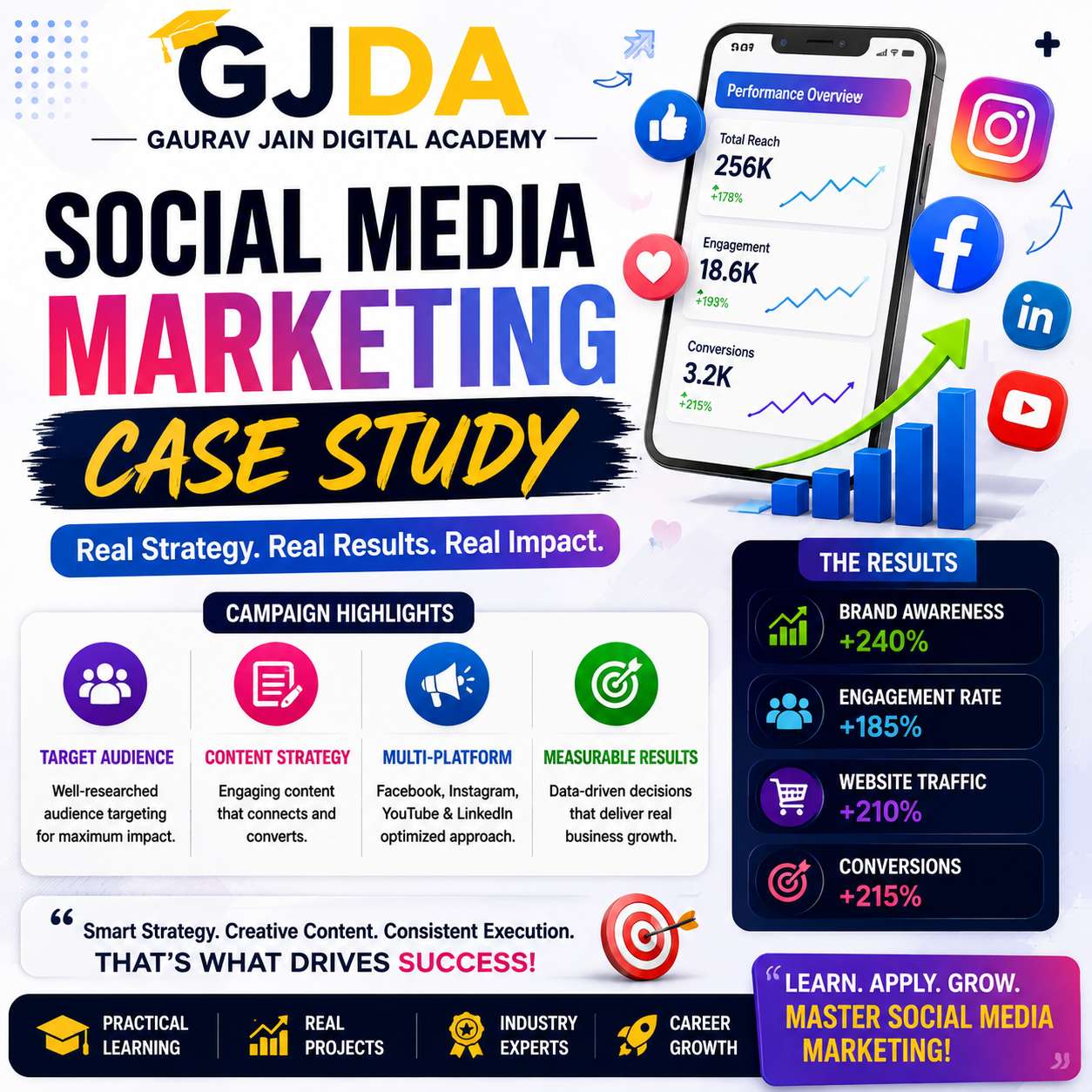
Social Media Marketing Case Study: Real Campaign Strategies, Insights and Proven Results
Explore a real social media marketing case study with proven strategies, campaign optimization, audience growth, engagement insights, and measurable results.
 Aug 01, 2026
Facebook Marketing for Beginners: Complete Step-by-Step Guide to Grow Your Business Online
Learn Facebook marketing for beginners with proven strategies to grow your audience, increase engagement, generate leads, and boost business success.
A regional bakery chain we know had 40,000 Instagram followers and almost no sales coming from the platform — great engagement on food photos, zero clear path from a Like to an actual order. Meanwhile a competitor with a fraction of the followers was running consistent Stories with a direct "order now" sticker and pulling real weekly revenue from Instagram alone. Follower count told you nothing useful there. This is the gap most businesses fall into with social media — building an audience without ever building a system that converts that audience into anything.
This page covers both halves of the field — Social Media Marketing (SMM), the paid and organic strategy of using social platforms to grow a business, and Social Media Optimization (SMO), the practice of optimizing profiles and content so they perform better organically, platform by platform, with honest notes on where each channel actually earns its place in a strategy.
What Are SMM and SMO?
SMM covers the full strategic use of social platforms — content, community management, paid ads, influencer partnerships — aimed at business goals like awareness, leads, or sales. SMO is narrower: optimizing your profiles, posting cadence, hashtags, and content format specifically to maximize organic visibility within each platform's own algorithm. Think of SMO as the tuning work sitting inside a broader SMM strategy, not a separate discipline running parallel to it.
They get used almost interchangeably in casual conversation, and honestly that's fine most of the time — but understanding the distinction matters when you're diagnosing why something isn't working. If organic reach is flat despite decent content, that's often an SMO problem (posting times, hashtag relevance, profile completeness). If reach is fine but nothing converts, that's usually an SMM strategy gap — no clear offer, no content funnel, no reason for a follower to actually buy.
Why It Matters
Here's the honest case — social media is where discovery increasingly happens before search even enters the picture, particularly for younger demographics who often search directly on Instagram or TikTok rather than Google for product recommendations and reviews. Ignoring that shift means missing an entire discovery layer competitors are already capturing.
It also matters for trust in a way that's easy to underestimate. A brand with an active, responsive, well-maintained presence reads as legitimate; one with an abandoned page or unanswered comments reads as untrustworthy, fairly or not. Customers check social profiles the way they used to check reviews — sometimes before they even visit a website — and what they find there shapes the decision before your actual sales pitch gets a chance.
How Social Platforms Actually Work
Every major platform runs on some version of engagement-predicts-distribution — the algorithm shows content to a small initial audience, measures how they respond (watch time, comments, shares, saves), and expands distribution based on that early signal. This is why the first hour or two after posting matters disproportionately; weak early engagement often caps how far a post travels regardless of quality.
| Platform | Best For |
|---|---|
| Visual brands, Reels-driven discovery, social commerce | |
| Community groups, local business visibility, older demographics | |
| B2B lead generation, personal branding, thought leadership content | |
| X (Twitter) | Real-time conversation, customer service, industry commentary |
| YouTube | Long-form and Shorts content, strong search-driven discovery over time |
| Product discovery, high purchase intent for home, fashion, DIY categories | |
| WhatsApp Business & Telegram | Direct customer communication, order updates, community building |
Short-form video — Reels, Shorts, TikTok-style content — has genuinely reshaped organic reach across nearly every platform over the past few years. Static image posts on Instagram, for instance, typically get meaningfully less organic distribution than Reels do right now, which is a real shift worth building content strategy around rather than resisting because static posts felt easier to produce.
A Real-World Example
A skincare brand was posting daily on Instagram with decent but plateaued engagement — good likes, weak saves and shares, the metrics that actually drive algorithmic reach. They restructured their content mix: fewer polished product shots, more "how to use this correctly" educational Reels and quick before/after content, plus consistent Stories with polls and question stickers to boost genuine interaction rather than passive viewing.
Within ten weeks, average Reel reach grew roughly fourfold, and — more importantly for the business — Instagram-attributed website clicks nearly tripled. The polished product photography hadn't disappeared, it just stopped being the primary content type. The lesson here isn't "post more Reels" as a blanket rule; it's that content genuinely worth saving or sharing gets rewarded more than content that just looks nice, and educational or useful content tends to earn those saves far more reliably than pure aesthetics.
Benefits of Social Media Marketing
- Direct, real-time customer relationship building that traditional advertising never offered — comments and DMs create genuine two-way conversation.
- Cost-effective testing ground for messaging and offers before committing bigger budgets to other channels.
- Social commerce features (Instagram Shopping, Facebook catalogs, Pinterest product pins) that shorten the path from discovery to purchase considerably.
Challenges
Organic reach has declined meaningfully across most platforms over the years as they've pushed advertisers toward paid promotion — a business relying entirely on organic content with no paid budget will genuinely struggle to grow reach at the pace they could a few years back. This isn't a motivational problem to solve with better content alone; it's a real platform economics shift worth planning around.
Algorithm changes happen without warning and can tank a previously reliable content format overnight — what worked consistently for months sometimes just stops, and there's rarely a clear explanation from the platform itself. Building a strategy resilient to this means diversifying content formats and platforms rather than over-relying on one winning approach.
Negative comments, viral complaints, or a poorly timed post can escalate into real reputation damage fast, and social listening — actively monitoring brand mentions and sentiment — becomes genuinely necessary once a brand has any real visibility, not an optional extra for larger companies only.
Common Mistakes
- Posting on every platform simultaneously with the same content and format, ignoring that each platform's audience and algorithm reward different things.
- Chasing follower count as the primary success metric instead of engagement quality, saves, shares, and actual conversions.
- Disappearing from comments and DMs after posting, treating social media as a broadcast channel rather than a conversation.
- Ignoring analytics entirely and posting based purely on gut feeling about what "should" perform well.
- Jumping on every trending audio or format regardless of whether it fits the brand, diluting a consistent identity in the process.
Best Practices
Pick two or three platforms where your actual audience spends time, and go deep rather than spreading thin across six. A B2B software company doing well on LinkedIn rarely needs to also chase TikTok trends; a fashion brand thriving on Instagram and Pinterest often doesn't need a serious LinkedIn presence.
Build a content calendar around a genuine mix — educational, entertaining, and promotional content, roughly following an 80/20 split favoring value over direct selling. Constant promotional content fatigues an audience fast; occasional promotion within a stream of genuinely useful or entertaining content converts better over time.
Respond to comments and messages promptly and like you're actually talking to a person, not reciting a script. Community management is where a lot of trust gets built or lost, quietly, in the background of whatever your top posts are doing.
Track saves and shares as seriously as likes, since these tend to be stronger algorithmic signals across most platforms right now — content people bookmark or send to a friend usually indicates genuine value in a way a quick like doesn't.
Useful Tools for Social Media Marketing
| Category | Tools |
|---|---|
| Scheduling & publishing | Buffer, Later, Meta Business Suite |
| Analytics & reporting | Native platform insights, Sprout Social for cross-platform reporting |
| Content creation | Canva, CapCut for video editing |
| Social listening | Brand24, Mention |
| AI-assisted content | Claude or ChatGPT for caption drafts and content ideation, always edited for brand voice |
Career Opportunities
Social media manager remains one of the most commonly hired digital marketing roles, and it's split increasingly into specialized tracks — community management, paid social advertising, and content creation each function as distinct skill sets at larger companies rather than one person handling everything alone.
Freelancing here is genuinely accessible — a freelancer managing content and community for three or four small business accounts can build a stable income within a year or so, and personal branding built through your own social presence often becomes the strongest portfolio piece for landing those clients in the first place. Agencies specializing purely in social media, including influencer marketing management, have grown considerably as brands recognize this needs dedicated attention rather than being tacked onto a generalist's plate. Earning potential varies by specialization and demonstrated results, with paid social and influencer campaign management generally commanding stronger rates than pure content posting work.
If you want structured, hands-on training instead of learning platform-specific quirks through trial and error, our Social Media Marketing & SMO Training Course covers content strategy, platform-specific optimization, paid social advertising, and community management with real account practice.
Practical Assignment
Pick a business you're familiar with, or your own social presence if you have one. Audit its last ten posts on its primary platform, noting which two performed best by saves or shares (not just likes) and which two performed worst. Write down what's genuinely different between the top and bottom performers — format, topic, hook, posting time. This exercise builds pattern recognition far more useful than any generic "best practices" list, because it's specific to that actual audience's behavior.
Frequently Asked Questions
What's the difference between SMM and SMO?
SMM is the broader strategic use of social platforms for business goals, including paid advertising and influencer partnerships. SMO specifically focuses on optimizing profiles and content for better organic visibility within each platform's algorithm.
Which social media platform is best for my business?
It depends entirely on where your specific audience spends time and what your goals are — B2B businesses often do best on LinkedIn, visual product businesses often do best on Instagram and Pinterest, and this genuinely varies enough that copying a competitor's platform choice without checking your own audience is a common mistake.
How often should I post on social media?
Consistency matters more than raw frequency — a realistic, sustainable cadence you can maintain long-term (say, three to five times a week on your primary platform) generally outperforms an aggressive daily schedule that burns out after a month.
Is organic social media marketing still effective without paid ads?
It can work, particularly for niche or highly engaging content, but organic reach has genuinely declined across most platforms over the years — most serious growth strategies now combine organic content with at least some paid promotion rather than relying purely on organic reach.
How important are hashtags in 2026?
Less influential than they were several years ago on platforms like Instagram, where content discovery has shifted more toward algorithmic recommendation than hashtag search, though they still hold real relevance on platforms like Pinterest and for niche community discovery elsewhere.
What is social listening and why does it matter?
It's the practice of monitoring mentions of your brand, products, or industry across social platforms to catch sentiment shifts, complaints, or opportunities early — becoming genuinely necessary once a brand has meaningful visibility, not just a nice-to-have for large companies.
Do I need to be on every social media platform?
No, and trying to maintain a genuine presence across six or seven platforms with limited time usually results in mediocre content everywhere rather than strong results anywhere. Two or three platforms done well typically outperforms trying to cover everything.
How is AI changing social media marketing?
It's speeding up caption writing, content ideation, and basic community management responses, though genuine brand voice and community trust still require human judgment and attention — AI drafts benefit from editing, not blind publishing.
What's a good engagement rate on social media?
It varies significantly by platform, follower count, and industry, but generally, smaller accounts often see higher engagement rates than large ones proportionally, so comparing your rate against your own past performance tends to be more useful than comparing against unrelated brands.
How much can a social media manager earn?
It varies by specialization, whether employed or freelancing, and portfolio strength, with paid social advertising and influencer campaign management skills generally commanding stronger rates than content posting alone.
Social media rewards genuine usefulness and consistency over cleverness or chasing every trend, and the accounts that struggle most are usually the ones treating it purely as a broadcast channel instead of an actual conversation with real people on the other end. Check the related reads below on influencer marketing, content marketing, and video marketing for the pieces that connect naturally to a full social strategy, and if you'd rather learn this hands-on with real platform practice, our Social Media Marketing & SMO Training Course is built around exactly this roadmap.