Master Meta Ads to Create, Optimize, and Scale High-Converting Facebook and Instagram Campaigns
3 Articles
 Sep 07, 2026
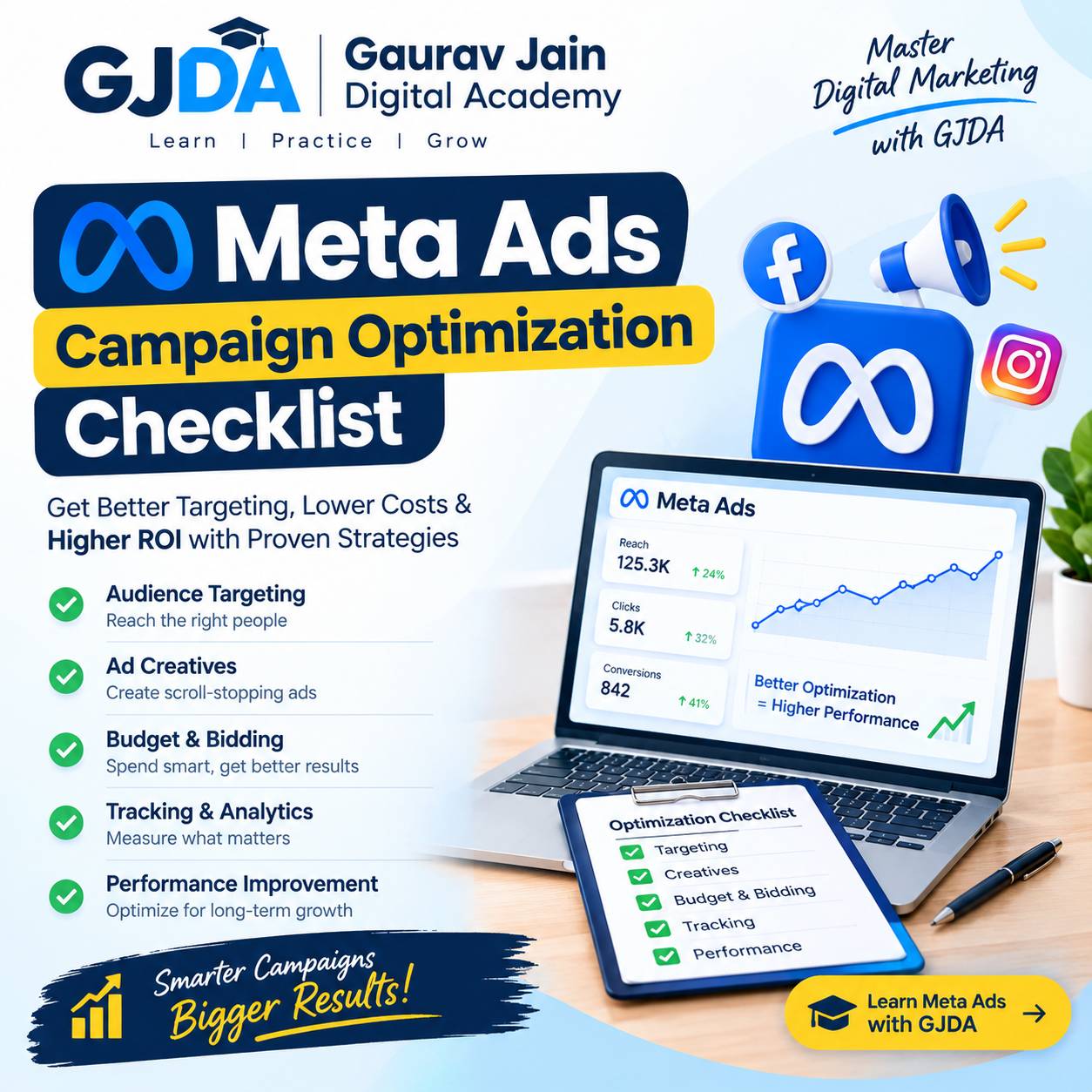
Meta Ads Campaign Optimization Checklist for Better Results
Use this Meta Ads campaign optimization checklist to improve targeting, creatives, budget, bidding, tracking, and ad performance with proven best practices.
 Aug 04, 2026
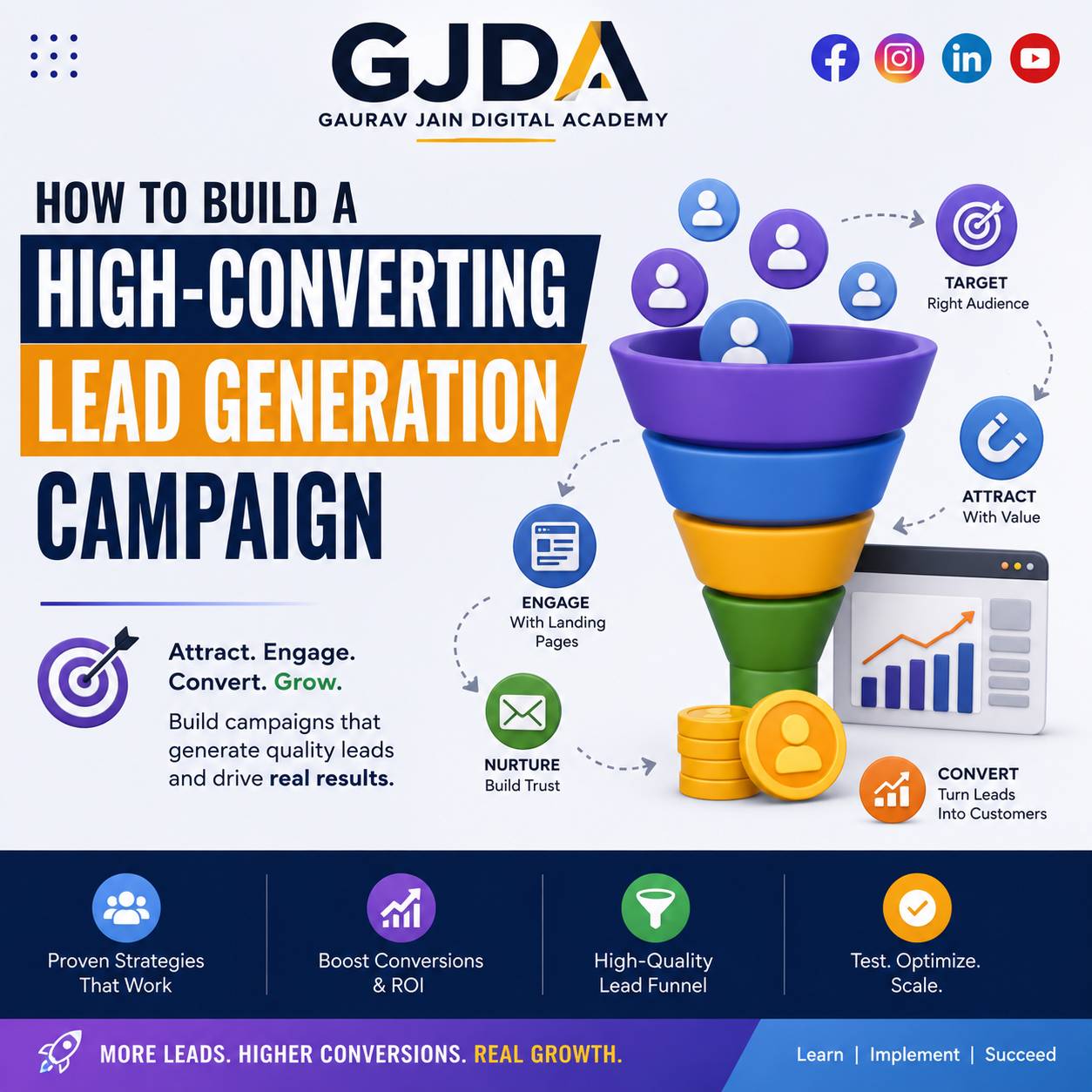
Expert Guide to Building a High-Converting Meta Ads Campaign for Better Leads and ROI
Learn how to build a high-converting Meta Ads campaign with expert strategies, audience targeting, ad creatives, and optimization tips to maximize ROI.
 Jul 31, 2026
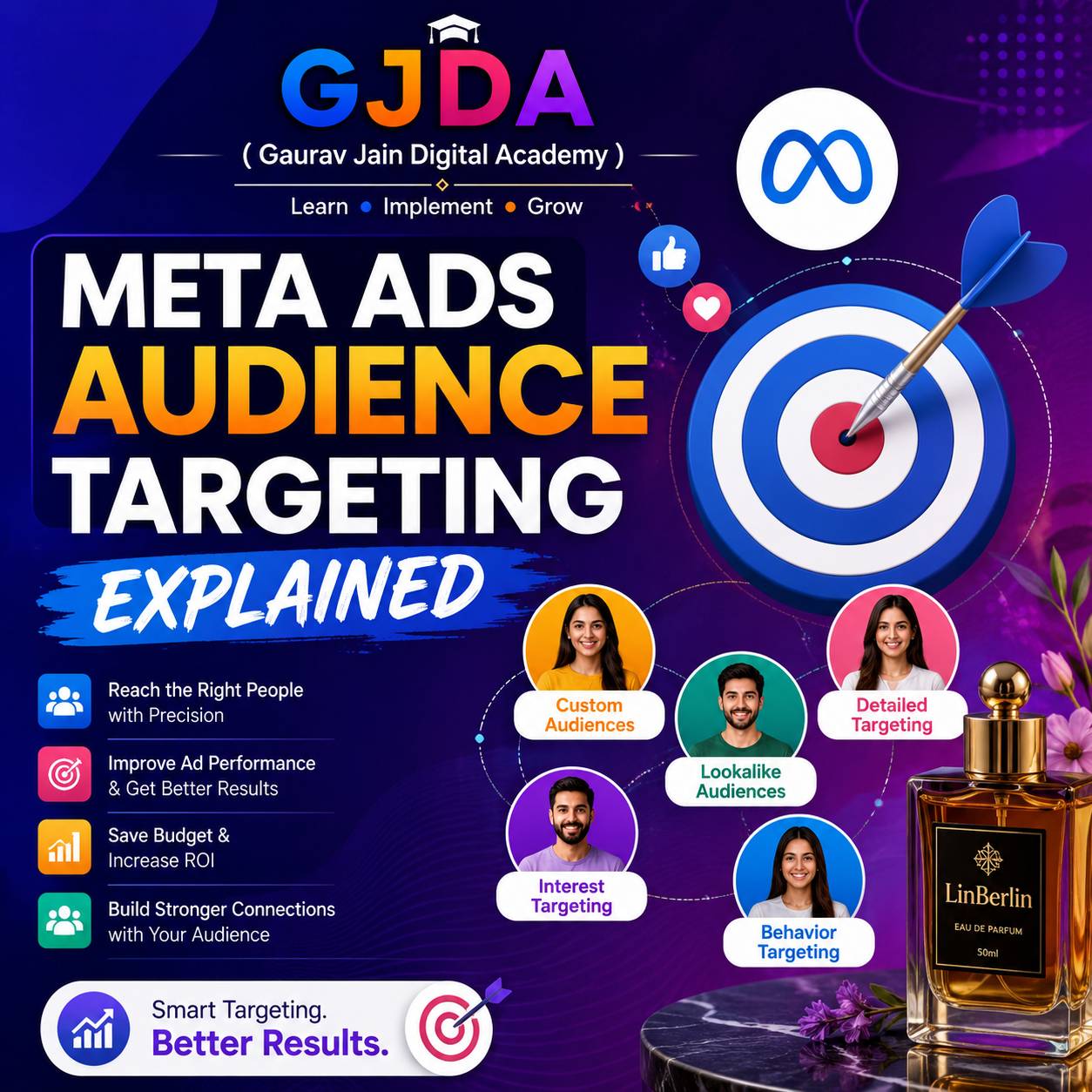
Meta Ads Audience Targeting Strategies to Reach the Right Customers Effectively
Learn Meta Ads audience targeting with practical strategies for custom, lookalike, and broad audiences to reach the right people and improve ad results.
A jewelry brand we worked with was running Meta ads with a broad "Advantage+" audience and no Pixel data feeding it properly — their Conversion API wasn't set up, so Meta's algorithm was essentially optimizing blind for the first three weeks. Cost per purchase sat around ₹1,100 on a product with maybe ₹400 of actual margin. Once we fixed the Conversion API setup and let the algorithm actually see purchase events reliably, cost per purchase dropped to roughly ₹520 within two weeks, no creative changes, no audience changes. Just fixing the data pipe. That's the unglamorous reality of a huge share of Meta Ads problems — it's rarely the ad copy people blame first.
This page covers the platform properly — campaign structure, targeting, the Pixel and CAPI setup that quietly determines whether any of the rest even works, creative formats, and where budgets actually get wasted.
What Are Meta Ads?
Meta Ads are the advertising system running across Facebook, Instagram, Messenger, and the Audience Network, all managed through one interface — Meta Ads Manager, accessed via Meta Business Suite. You're not choosing Facebook versus Instagram as separate platforms most of the time; you're setting placements within a single campaign that can serve across both, letting Meta's delivery system decide where your budget performs best unless you deliberately restrict it.
What separates Meta from Google Ads fundamentally is intent versus interest. Google catches people actively searching for something. Meta interrupts people scrolling — showing them something they didn't know they wanted yet, based on behavioral and interest signals. That's a genuinely different psychological moment to advertise into, and it changes almost everything about creative strategy, from the first frame of a video to how salesy your copy can afford to be.
Why It Matters
Here's the honest take — Meta remains one of the few platforms where a well-targeted, well-made ad can reach a precisely defined audience at a genuinely low cost, at least compared to traditional media, even after years of rising CPMs. A ₹500/day budget can realistically reach thousands of relevant people in most Indian markets, which simply wasn't possible for small businesses before platforms like this existed.
It also matters because of how visual and immediate the format is. A product that photographs or films well has a natural advantage here that it doesn't necessarily have in text-heavy search advertising — this is part of why D2C brands in fashion, beauty, and home goods have leaned so heavily on Meta as a primary acquisition channel over the past several years, even as costs have climbed.
How Meta Ads Actually Works
Campaign structure sits in three layers — Campaign (where you pick an objective like Sales, Leads, Traffic, or Engagement), Ad Set (where audience, budget, and placement live), and Ad (the actual creative and copy). Meta's algorithm optimizes within whatever objective and budget structure you set, learning from real user interactions — which is why campaigns typically need a "learning phase" of roughly 50 conversion events before performance stabilizes.
| Campaign Objective | Best For |
|---|---|
| Sales | Driving purchases, typically paired with catalog or dynamic ads |
| Leads | Collecting contact info through in-platform forms or landing pages |
| Traffic | Driving website visits, useful early-stage before enough purchase data exists |
| Engagement | Building post interaction, video views, page likes |
| Awareness | Maximizing reach and brand recall, less directly tied to immediate conversion |
The Meta Pixel and Conversion API (CAPI) together are what feed the algorithm the data it needs to optimize properly. The Pixel tracks browser-side events; CAPI sends the same events server-side, which matters enormously since iOS privacy changes since 2021 have made browser-only tracking noticeably less reliable. Running both together, matched properly, tends to recover a meaningful chunk of the tracking accuracy lost to those privacy changes — and honestly, a lot of underperforming accounts we've audited simply never set CAPI up at all.
Audience targeting splits into three broad categories: Core audiences (built from demographics, interests, and behaviors you define manually), Custom audiences (built from your own data — website visitors, customer lists, past purchasers), and Lookalike audiences (Meta finding new people who resemble an existing custom audience). Lookalikes built from actual purchasers, not just website visitors, tend to perform meaningfully better, because the resemblance the algorithm is matching against is a stronger buying signal.
A Real-World Example
A fitness apparel brand launched with a fairly typical beginner setup — one campaign, broad Advantage+ targeting, static product images as creative. Cost per purchase hovered around ₹850, workable but not great given their margins. They restructured into a clearer testing framework: three distinct creative angles (a founder-story video, a customer testimonial reel, and a straightforward product demo carousel), each tested against the same Advantage+ audience for two weeks with equal budget.
The testimonial reel outperformed the other two by a wide margin — cost per purchase dropped to roughly ₹430 once budget shifted toward that winning creative. What's interesting is the founder-story video, which the team was personally most excited about, performed worst of the three. That's a useful reminder — what a brand team likes creatively and what actually converts an anonymous scroller are sometimes two very different things, and testing settles that disagreement far better than internal opinion does.
Benefits of Meta Ads
- Precise audience targeting based on interests, behaviors, and lookalike modeling that's hard to replicate on most other ad platforms at this scale.
- Strong creative flexibility — video, carousel, Reels, Stories, and catalog-based dynamic ads all give multiple ways to present the same product.
- Genuinely accessible entry cost, letting small businesses test and learn without the large upfront commitment traditional advertising required.
Challenges
iOS privacy changes have made attribution genuinely harder than it was in 2019-2020, and any advertiser still working from old case studies or expecting old-era targeting precision is setting themselves up for disappointment. Proper CAPI setup helps but doesn't fully restore what was lost — this is an honest limitation of the platform right now, not something a clever workaround fully solves.
Ad fatigue sets in faster than beginners expect, especially with a narrow audience and limited creative variation — the same ad shown to the same small audience repeatedly sees performance decay within a couple of weeks in a lot of cases, which is why a steady pipeline of fresh creative matters more here than on platforms like Google Search.
Meta's ad policies around health, finance, and certain claims are strict and enforcement can feel inconsistent — perfectly compliant ads sometimes get flagged, and appeals can take time. Building a business heavily reliant on a platform where your account could face a review or temporary restriction carries real operational risk worth planning around.
Common Mistakes
- Launching Sales campaigns without the Pixel and CAPI properly configured, leaving the algorithm optimizing on incomplete or delayed data.
- Testing too many variables at once — audience, creative, and copy all changed simultaneously — making it impossible to know what actually drove a performance shift.
- Turning campaigns off and on repeatedly during the learning phase, which resets the algorithm's optimization progress and often makes performance worse, not better.
- Relying on a single ad creative for months without refreshing it, watching frequency climb and cost per result quietly rise alongside it.
- Sending traffic to a slow-loading or poorly designed landing page, wasting the click after paying for it.
Best Practices
Set up the Pixel and Conversion API properly before launching any Sales campaign, and verify event matching quality in Events Manager — this single step affects more downstream performance than almost any targeting or bidding decision you'll make afterward.
Test creative angles more aggressively than audience segments in most cases. Meta's own broad Advantage+ targeting has gotten genuinely good at finding the right people; the bigger lever for most advertisers now is which creative actually stops the scroll and earns the click.
Build lookalike audiences from purchaser data specifically, not just website traffic, whenever you have enough purchase volume to support it — the quality difference in the resulting audience is usually noticeable.
Give the learning phase room to work. Avoid major edits to a campaign in its first few days unless something is clearly broken; constant tinkering during this window tends to hurt more than it helps.
Useful Tools for Meta Ads
| Category | Tools |
|---|---|
| Campaign management | Meta Ads Manager, Meta Business Suite |
| Tracking setup | Meta Pixel, Conversion API, Google Tag Manager for implementation |
| Creative production | Canva, CapCut for video editing |
| Landing pages | Unbounce, Shopify's native page builder for e-commerce |
| AI-assisted ad copy | Claude or ChatGPT for headline and copy variations, Meta's own AI creative tools within Ads Manager |
Career Opportunities in Meta Ads
Meta Ads management remains one of the most requested skills in digital marketing job postings and freelance platforms alike, largely because so many D2C and local businesses run their primary acquisition through it. A freelancer who can demonstrate a track record of lowering cost per result across a handful of client accounts tends to build a client base faster here than in a lot of other specializations, simply because the impact on revenue is so direct and easy to show in a portfolio.
Agency-side, Meta Ads management is frequently bundled with Google Ads as a combined paid media service offering, and specialists who understand both platforms — knowing when a business should lean Meta versus Search based on their specific funnel — tend to command stronger rates than single-platform specialists. Earning potential depends heavily on portfolio strength and client results rather than years of experience alone; a specific, verifiable case study of cutting cost per purchase in half carries more weight in a client pitch than a long resume.
If you want structured, hands-on training instead of learning through expensive trial and error on live ad accounts, our Meta Ads Training Course covers Pixel and CAPI setup, campaign structure, creative testing frameworks, and audience strategy with real account practice.
Practical Assignment
Pick a product or service you're familiar with. Sketch out three genuinely different creative angles for a Meta ad promoting it — not three variations of the same idea, but three distinct approaches (say, a direct product demo, a customer testimonial style, and a problem-agitation style opening). Write a short script or description for each, and note which audience segment you'd test each against first. This builds the creative-testing mindset that drives most real performance gains on this platform, far more than audience targeting tweaks alone.
Frequently Asked Questions
What's the difference between Facebook Ads and Meta Ads?
Meta Ads is the current umbrella term covering advertising across Facebook, Instagram, Messenger, and the Audience Network, all managed through the same Ads Manager interface — "Facebook Ads" is really just the older, narrower name for the same underlying system.
How much does it cost to start advertising on Meta?
There's no fixed minimum, and many advertisers start testing with ₹300-500 a day, though reaching Meta's recommended learning phase volume (roughly 50 conversions per ad set within a week) may require a higher budget depending on your product's price point and conversion rate.
What is the Meta Pixel and why does it matter?
It's a tracking code installed on your website that reports user actions — page views, add to carts, purchases — back to Meta, which the algorithm then uses to optimize ad delivery toward people likely to take similar actions. Without it, Meta is largely optimizing blind.
What is Conversion API (CAPI) and do I need it?
It's a server-side tracking method that sends the same event data as the Pixel but isn't blocked by browser privacy restrictions the way Pixel-only tracking increasingly is. Yes, it's genuinely worth setting up alongside the Pixel for any serious Sales campaign given how much browser tracking has degraded since 2021.
How long does the Meta Ads learning phase take?
Typically until an ad set accumulates around 50 conversion events, which can take anywhere from a few days to a couple of weeks depending on budget and conversion rate — avoiding major edits during this window helps the algorithm stabilize faster.
Is Meta Ads or Google Ads better for my business?
It depends on your product and buyer behavior — Google Ads tends to work better for products people actively search for, while Meta often works better for visually compelling products that benefit from discovery-based advertising. Many mature businesses run both.
Why did my Meta ad get rejected or my account restricted?
Usually a policy violation related to prohibited content, misleading claims, or restricted categories like health and finance — Meta's automated review system can also flag compliant ads incorrectly at times, in which case appealing through Ads Manager is the right next step.
What's a good return on ad spend (ROAS) for Meta Ads?
It varies significantly by industry and margin structure, but many e-commerce advertisers target somewhere around 3x or higher as a healthy benchmark, though a lower ROAS can still be profitable for high-margin products, and a higher one might not be enough for thin-margin categories.
Should I use Advantage+ campaigns or manual targeting?
Advantage+ has become genuinely strong for a lot of advertisers, particularly those with solid Pixel/CAPI data feeding it, but manual audience control still has a place for niche products or smaller budgets where broad automated targeting might spend inefficiently before enough data accumulates.
How much can a Meta Ads specialist earn freelancing?
It varies widely based on client portfolio, specialization, and demonstrated results, and the strongest earners typically have specific, verifiable case studies of cost-per-result improvements rather than general years of experience alone.
Meta Ads rewards creative testing and clean tracking data more than clever audience targeting tricks these days, and the accounts that struggle are usually the ones skipping the unglamorous setup work — Pixel, CAPI, a genuine creative testing rhythm — in favor of chasing the next targeting hack. Check the related reads below on Google Ads, conversion rate optimization, and ad creative strategy for the pieces that round out a full paid acquisition approach, and if you'd rather learn this hands-on with real account practice, our Meta Ads Training Course is built around exactly this roadmap.