Complete Affiliate Marketing Guide to Learn, Grow, Earn, and Build a Successful Online Business
2 Articles
 Aug 04, 2026
Expert Affiliate Marketing Project Ideas with Practical Examples and Proven Strategies for Success
Discover the best affiliate marketing project ideas with practical examples, expert strategies, and real-world insights to build skills and earn commissions.
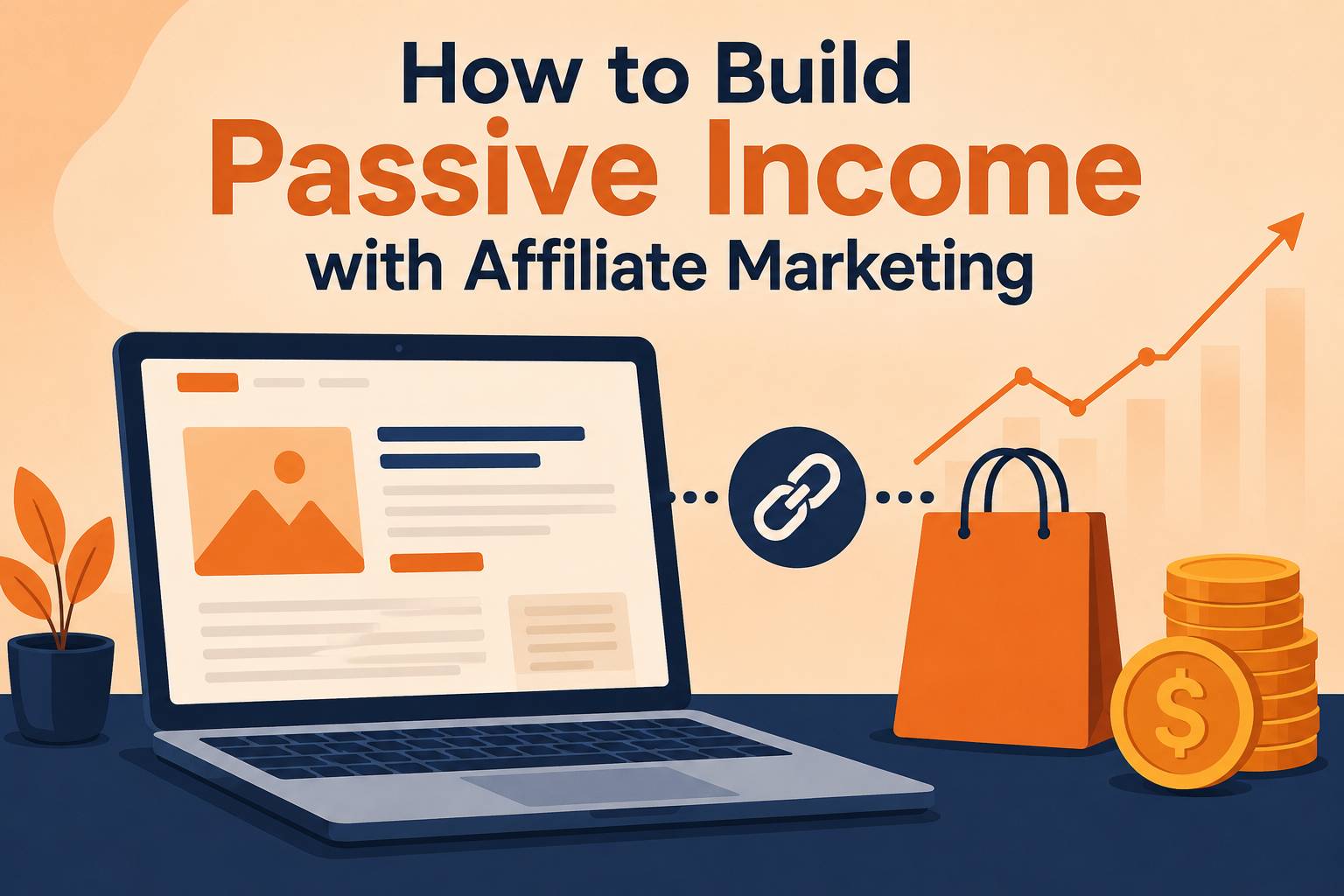 Jul 28, 2026
Affiliate Marketing for Passive Income: What Actually Happens Month by Month
Learn how affiliate marketing actually builds passive income — real timelines, real earnings, common mistakes, tools, and a practical assignment to start today.
Somewhere on the internet right now, a college dropout with no coding skills and a $9 domain name is making more money from one blog post than most people make in a month at a full-time job. That's not a hook. That's just what affiliate marketing looks like when it's working — quietly, in the background, off content that was written months or years ago.
This page exists because most "guides" to affiliate marketing either oversell it (buy this course, quit your job by Friday) or undersell it into a boring Wikipedia summary. Neither helps you actually start. What follows is the real shape of the business — how the money moves, what breaks for beginners, what the pros do differently, and where to learn it properly if you want to treat this as a skill instead of a lottery ticket.
What Affiliate Marketing Actually Is
You promote someone else's product. Someone buys it because of your recommendation. You get paid a cut. That's the entire mechanism, and everything else — the funnels, the SEO, the email sequences — is just infrastructure built around that one transaction.
The formal definition, if you need it for a client pitch or a resume: affiliate marketing is a performance-based revenue model where a merchant pays a commission to an affiliate for driving a sale, lead, or action through a tracked link. But definitions don't teach you anything you can act on. What matters is the relationship between three parties — the merchant (Amazon, a SaaS company, a course creator), the affiliate (you), and the customer — and the fact that you never touch the product, the shipping, the customer support, or the refunds. You touch the recommendation. That's it.
Realistically, most people's mental model of this is wrong. They picture "put a link on Instagram." The actual industry runs mostly on content — comparison articles, YouTube reviews, email newsletters, and increasingly, short-form video with a link in bio. The link is the last step, not the strategy.
Why It Matters (Beyond "Passive Income")
Here's the thing people skip past: affiliate marketing is one of the few online business models where you can start with zero inventory, zero customer service burden, and genuinely low capital risk. A dropshipping store needs ad spend and stock management. A SaaS product needs development. An affiliate site needs, at minimum, a domain, hosting, and your time.
It also matters because it scales without scaling your hours proportionally. A review published in 2023 can still be earning commissions in 2026 if it ranks and the offer is still live. That's not true of a freelance gig or a consulting call — those trade time directly for money. Affiliate content, once it's ranking, keeps working on days you don't.
None of that means it's easy. It isn't. It just means the ceiling and the floor are both different from most side hustles.
How Affiliate Marketing Actually Works
Every affiliate relationship runs on tracking. When you join a program, you get a unique link — usually with a tracking parameter or a redirect through the network's domain. When someone clicks it, a cookie (or, increasingly, a server-side tracking pixel) records that click and attributes any resulting purchase to you, typically within a set window — 24 hours for Amazon, 30 to 90 days for many SaaS and course programs.
The flow looks like this, roughly:
- You publish content with your affiliate link embedded naturally — inside a review, a tutorial, a resource page.
- A reader clicks. A cookie gets set on their browser, or the click gets logged server-side.
- They buy — maybe immediately, maybe eleven days later after comparing five other options.
- The network or merchant credits the sale to your account.
- You get paid on a schedule — net-30, net-60, sometimes a minimum payout threshold you have to clear first.
That last point trips up a lot of beginners. You can make your first sale and still not see money for six weeks because of payout thresholds and holding periods (merchants hold funds briefly to account for refunds). Nobody mentions this in the "make money online" videos.
A Real-World Example
Take a niche site reviewing standing desks. The writer buys three desks, tests them for a month, photographs the assembly process, and publishes a 4,000-word comparison with an honest "don't buy this one, the motor is loud" verdict on one model. That honesty is what gets it shared and linked to by other sites — which, in turn, is what gets it ranked.
Six months in, that one article ranks on page one for "best standing desk under $400." At 8,000 monthly visits and a realistic 2% click-through to an affiliate link, with a 3% conversion rate on a desk averaging $350 and an 8% commission — you're looking at roughly $67 a month from one article. That sounds unimpressive until you multiply it by fifty articles, some of which perform far better than that. This is why affiliate income is a portfolio business, not a single-bet business.
Commission Models — CPS, CPA, CPL, CPC
Not all affiliate programs pay the same way, and picking the wrong model for your traffic type is a quiet, common way people leave money on the table.
| Model | What Triggers Payment | Typical Payout | Best Suited For |
|---|---|---|---|
| CPS (Cost Per Sale) | An actual completed purchase | 2%–50% of sale, varies wildly by industry | E-commerce, physical products, software |
| CPA (Cost Per Action) | A specific action — signup, free trial, form fill | Flat fee, often $5–$150 | SaaS free trials, finance, insurance leads |
| CPL (Cost Per Lead) | Collecting a qualified lead's contact info | Flat fee, $1–$50 typically | B2B, education, high-ticket consulting |
| CPC (Cost Per Click) | Simply the click itself | Fractions of a cent to a few dollars | High-traffic content sites, display-style affiliate |
CPS is the most common model beginners run into (Amazon Associates, most e-commerce programs), and it's the most forgiving to learn on because the payout logic is intuitive — you sold something, you get paid. CPA and CPL programs pay faster and often better per action, but they demand traffic that actually converts to leads, which usually means you need to understand the buyer's intent more precisely. CPC is mostly a legacy model at this point outside of a handful of finance and insurance verticals — it's rarely worth structuring a whole strategy around anymore.
Beginner's Guide: Getting Your First Commission
Skip the "choose your niche" advice for a second — everyone says that, and it's not wrong, but it's not where beginners actually get stuck. They get stuck at the gap between "I picked a niche" and "I made a sale," which is usually four to eight months of unglamorous work. Here's a more honest sequence:
- Pick a niche you can write about without running out of things to say by article ten. Passion helps, but knowledge helps more.
- Join one affiliate network relevant to that niche rather than five — Amazon Associates, ShareASale, CJ Affiliate, or a direct program if the brand offers one.
- Publish content that answers a real buying question — "best X for Y" and "X vs Z" formats convert disproportionately well because the reader is already close to purchasing.
- Disclose the affiliate relationship clearly, near the top of the content, not buried in a footer nobody reads.
- Track what's actually converting — most beginners guess instead of checking their dashboard, and end up writing more of what doesn't work.
It's worth saying plainly: your first few months will probably produce very little money. That's normal, and it's also the point where most people quit — right before the content they published starts to mature in search rankings. If you want a more structured, faster path through this stage with feedback instead of guesswork, our Affiliate Marketing Training Course walks through this exact ramp-up phase with real case studies and templates, not just theory.
Advanced Strategies (Once You've Got Traction)
Once you've got a site earning something — even a modest few hundred dollars a month — the game shifts from "publish content" to "compound what's already working." A few things that separate five-figure-a-month affiliates from stuck beginners:
Diversifying commission structures across multiple programs for the same product category, so you're not entirely dependent on one merchant's payout terms or, worse, their sudden program shutdown. This happened industry-wide when several major SaaS companies quietly slashed commission rates in 2023 — sites that had all their eggs in one program took a real hit.
Building email lists from the content itself, not just relying on search traffic. An email list you own is insulated from algorithm changes in a way a Google-dependent site never fully is. This is, in my experience, the single most underused lever by beginner affiliates — they treat email as an afterthought instead of the retention engine it actually is.
Negotiating custom commission rates once you're sending consistent volume. Most networks won't offer this upfront, but a polite email once you've proven traffic often gets a 20–30% rate bump. Nobody advertises this; you have to ask.
For a deeper breakdown of email-list building specifically for affiliate sites, see our related post on building an affiliate email funnel that doesn't feel spammy.
Benefits of Affiliate Marketing
- Low startup cost compared to almost any other online business model — a domain and hosting can run under $100 a year to start.
- No product creation, inventory, shipping, or customer support obligations.
- Location independence — the work travels with a laptop.
- Genuinely scalable income once content matures and starts ranking or getting shared consistently.
- A skill set (SEO, copywriting, funnel thinking) that transfers directly into freelance work, agency work, or building your own products later.
Challenges Nobody Puts on the Sales Page
It's slow at the start. Slower than almost anyone selling a course about it will tell you. Search rankings take months. Trust takes longer. And commission structures change — sometimes overnight, sometimes with thirty days' notice buried in an email you didn't read carefully.
There's also the dependency problem. You don't control the merchant's product quality, their site's conversion rate, or their decision to shut the affiliate program down entirely. A site that leaned heavily on one now-defunct web hosting affiliate program in 2022 learned this the hard way when that company got acquired and the program vanished within a quarter.
And honestly? Google's algorithm updates have made this harder than it was five years ago. Thin, purely commission-driven content gets buried now in favor of pages that show real first-hand experience — which is a good thing for readers, but it does mean the "publish 200 words and slap a link on it" era is over.
Common Mistakes Beginners Make
Promoting too many products at once instead of going deep on ones you actually understand. Chasing every high-commission offer that shows up in a network dashboard is a fast way to produce content that reads exactly like what it is — unresearched.
Ignoring disclosure requirements. This isn't optional, legally or ethically, and we cover the specifics below.
Not tracking clicks versus conversions separately — traffic without conversion tells you almost nothing about whether your content or your offer is the problem.
Building entirely on rented land — a single social platform, with no email list or owned site underneath it. Platforms change algorithms and terms of service without asking permission.
Best Practices That Actually Move the Needle
Write like you've actually used the product, because search engines and readers can both tell the difference now, in ways they genuinely couldn't a few years ago. Specific details — a photo of the box, a number from your own testing, a criticism alongside the praise — do more for conversion and trust than polished marketing copy ever will.
Update old content instead of only publishing new content. An article from 2021 with outdated pricing or a discontinued product mentioned is actively hurting your credibility and your rankings both.
Match commission model to content intent — a CPA offer inside a "best of" list underperforms compared to putting it in a dedicated "how to get started with X" post where the reader is closer to taking that specific action.
Legal and Disclosure Guidelines
The FTC in the US (and equivalent bodies elsewhere — the ASA in the UK, ACCC in Australia) requires clear, conspicuous disclosure whenever you're compensated for a recommendation. "Clear and conspicuous" means near the link or claim itself, in plain language — not a vague "affiliate links may be used" statement hidden in a privacy policy nobody opens.
A working disclosure example: "This post contains affiliate links. If you buy through them, I may earn a commission at no extra cost to you." Placed near the top of the content, not just the footer.
This isn't just a legal box to check, either — audiences respond better to transparent disclosure than to the illusion that a recommendation is purely organic. Trust, once broken by a hidden financial motive a reader discovers on their own, is hard to rebuild.
Affiliate Networks Worth Knowing
| Network | Best For | Notes |
|---|---|---|
| Amazon Associates | Physical products, beginners | Low commission rates (1%–10%), but huge product range and trust |
| ShareASale | Mid-size brands, apparel, home goods | Wide variety of merchants, decent reporting tools |
| CJ Affiliate | Established brands, finance, travel | Higher application bar, strong for professional affiliates |
| Impact | SaaS and tech companies | Increasingly the default for modern software affiliate programs |
| PartnerStack | B2B SaaS specifically | Popular among newer software companies for partner programs |
For a full walkthrough of applying and getting accepted into networks that have stricter approval criteria, we've got a dedicated post: how to get approved for competitive affiliate networks.
Tools of the Trade
- Ahrefs or Semrush — for keyword research and understanding what your competitors already rank for.
- WordPress + a lightweight theme — still the most common CMS for affiliate content sites, mostly because of plugin flexibility.
- Pretty Links or ThirstyAffiliates — for cloaking and managing affiliate links at scale without a mess of ugly URLs.
- ConvertKit or MailerLite — for the email list you should be building from day one, not month twelve.
- Google Search Console — free, and arguably more useful day-to-day than any paid SEO tool once your site has some history.
AI in Affiliate Marketing
AI tools have changed the production side of this business more than almost anything else in the last three years. Drafting outlines, generating first-pass content, summarizing product specs from manuals — all of that is faster now. But here's the honest limitation: AI-generated content that isn't edited with real first-hand knowledge tends to underperform in search results that increasingly reward demonstrated experience. Google's own guidance leans hard on this. The winning approach, for most affiliates now, is AI-assisted drafting combined with genuinely human editing, testing, and opinion layered on top — not AI content published raw.
Where AI genuinely helps without the trade-off: competitor research, spotting content gaps, summarizing customer reviews across dozens of sources to find recurring complaints worth addressing in your own review.
Career Opportunities in Affiliate Marketing
Beyond running your own site, there's a real job market here — affiliate managers on the brand side (managing relationships and payouts for a company's affiliate program), affiliate marketing consultants, SEO specialists who specialize specifically in monetized content, and agency roles building affiliate strategy for e-commerce clients. Affiliate program managers at mid-size companies commonly earn in the $55,000–$90,000 range in the US, with senior or agency-side roles going higher.
Earning Potential — Realistically
This varies enormously, and anyone giving you a single confident number is probably selling something. New affiliates in year one often earn under $500 total, sometimes nothing, and that's not a failure — it's the ramp-up period. Established niche site owners with a portfolio of ranking content commonly see $2,000–$10,000 a month within two to three years, though outcomes above that range depend heavily on niche, competition, and consistency. It depends, genuinely, more than most guides admit — on niche profitability, content volume, and whether you built an email list underneath the traffic or not.
How to Learn Affiliate Marketing Professionally
Free content — blogs, YouTube, forums like the ones on Reddit's affiliate marketing communities — gets you the concepts. What it usually doesn't give you is structured feedback on your actual site, your actual niche choice, your actual content gaps. That's the gap our Affiliate Marketing Training Course is built to close — real case studies, live niche audits, and a structured curriculum that takes you from zero to your first consistent commissions, rather than a scattered pile of blog posts you have to piece together yourself.
Practical Assignment
Before you move on from this page, do this: pick one product you already own and genuinely like. Write 500 words reviewing it honestly, including one thing you'd change about it. Find the affiliate program for that product or brand and apply. That single exercise — done, not just read about — puts you ahead of most people who bookmark guides like this one and never act on them.
Frequently Asked Questions
Is affiliate marketing still profitable in 2026?
Yes, though the bar for "thin content ranks" has moved up considerably. Genuine expertise and first-hand testing matter more now than they did five years ago.
How much money do I need to start?
Realistically, under $200 covers a domain, a year of hosting, and a basic theme. The real cost is time, not capital.
Do I need a website, or can I do this on social media alone?
You can start on social platforms, but relying solely on them is risky — algorithm changes and account suspensions can wipe out income overnight. A website gives you an owned asset.
How long before I make my first sale?
Varies a lot, but most beginners see their first commission somewhere between one and four months in, assuming consistent publishing.
What's the difference between an affiliate network and an affiliate program?
A network (like ShareASale) hosts multiple merchants' programs in one dashboard. A program is a single company's direct affiliate offer, sometimes run in-house without a network at all.
Is Amazon Associates worth it for beginners?
It's a reasonable starting point because approval is relatively easy and trust in the Amazon checkout is high, but the commission rates are among the lowest in the industry.
Do affiliate links hurt my SEO?
Not if they're properly tagged with nofollow or sponsored attributes, which most affiliate plugins handle automatically. Ignoring this can, in some cases, create issues.
Can I do affiliate marketing without showing my face or building a personal brand?
Yes — plenty of successful affiliate sites are built around expertise and content quality rather than personality-driven branding.
What niches are oversaturated right now?
Extremely broad "make money online" and general weight-loss content are brutally competitive. Narrower niches — specific hobby gear, B2B software categories, local service comparisons — tend to have more room.
How do I know if a commission rate is actually good?
Compare it against the product's price point and typical conversion rate, not the percentage alone. An 8% commission on a $2,000 item beats a 40% commission on a $10 item.
Do I have to disclose affiliate links even on social media posts?
Yes — disclosure requirements apply regardless of platform, including Instagram, TikTok, and YouTube descriptions.
Is affiliate marketing a good side hustle or does it need to be full-time?
It works well as a side hustle in the early stages precisely because the content-first model doesn't demand real-time availability the way freelancing or client work does.
Where This Leaves You
Affiliate marketing rewards the people who treat it like a real skill — writing, research, tracking, patience — rather than a shortcut. The mechanics aren't complicated once you've seen them laid out. The execution, over months rather than days, is where it actually gets decided. If you want that execution guided rather than guessed at, our Affiliate Marketing Training Course is built specifically for that stretch between "I understand this" and "this is actually making money."