Someone searching "Meta Ads campaign optimization checklist" is usually staring at a Facebook or Instagram ads account that's either underperforming or just launched, wanting a clear, ordered list of what to actually check rather than another vague article about "best practices." This one is built to be that list — specific enough to work through today, with the reasoning behind each item so you're not just following steps blindly. Worth saying upfront: Meta's ad platform has shifted meaningfully over the past couple of years, mostly around how much control advertisers hand over to its AI systems. A checklist built around manual interest targeting and narrow audience segmentation, the way this used to be taught, will actively work against you in several places today.
What a Meta Ads Optimization Checklist Actually Covers
Skip the assumption that optimization here means constantly adjusting bids or swapping interests in and out. That's mostly outdated thinking now that Advantage+ Audience handles targeting decisions algorithmically for most campaign objectives. A real checklist today covers your signal quality — what data you're feeding the system — your account structure, your creative variety, and a disciplined review rhythm, rather than daily micromanagement of settings that barely move the needle anymore.
Why This Matters More Than It Did a Few Years Back
Because the cost of a poorly signaled account has gone up even as the platform has automated more of the targeting work. Meta's algorithm needs strong conversion signals and a consolidated structure to actually learn efficiently — fragment your budget across too many overlapping ad sets, or feed it weak signals like link clicks instead of actual purchases, and the system has very little to work with, regardless of how sophisticated its underlying AI is. Here's the honest part: a lot of advertisers trained on the old interest-stacking approach feel like they've lost control, and in a real sense, they have. The job has shifted from picking precise audiences to training a system well, and that requires a different kind of discipline — one built around data quality rather than targeting precision.
How to Work Through This Checklist Properly
Rather than treating every item as equally urgent, work through three tiers in order — signal quality, structure, and creative — since fixing signal quality before structure, and structure before creative, actually affects how quickly improvements show up.
| Tier | What to Check | Why the Order Matters |
|---|---|---|
| Signal Quality | Pixel and Conversions API setup, event match quality, which conversion event you're optimizing for | Every downstream targeting and bidding decision depends on this data being accurate |
| Structure | Campaign consolidation, Advantage+ Audience setup, budget allocation across ad sets | Determines how efficiently your conversion data actually gets used by the algorithm |
| Creative | Ad variety, format mix, message testing, frequency and fatigue monitoring | With targeting mostly automated, creative increasingly determines which sub-audience actually engages |
Signal Quality Checklist Items
- Confirm your Meta Pixel and Conversions API are both firing correctly and reporting matching event counts — a gap between the two usually points to a tracking issue that's quietly weakening every optimization decision built on top of it
- Check your event match quality score inside Events Manager; low match quality means Meta has less confidence connecting your website actions to real Facebook or Instagram accounts, which directly limits how well it can target
- Optimize toward your strongest available conversion event, not the easiest one to trigger — a completed purchase teaches the algorithm far more than an add-to-cart, even though add-to-cart events happen more frequently
Structure Checklist Items
- Consolidate overlapping ad sets running the same objective toward the same audience — this is one of the more overlooked items, and fragmenting your budget this way often just creates internal competition that raises your own costs
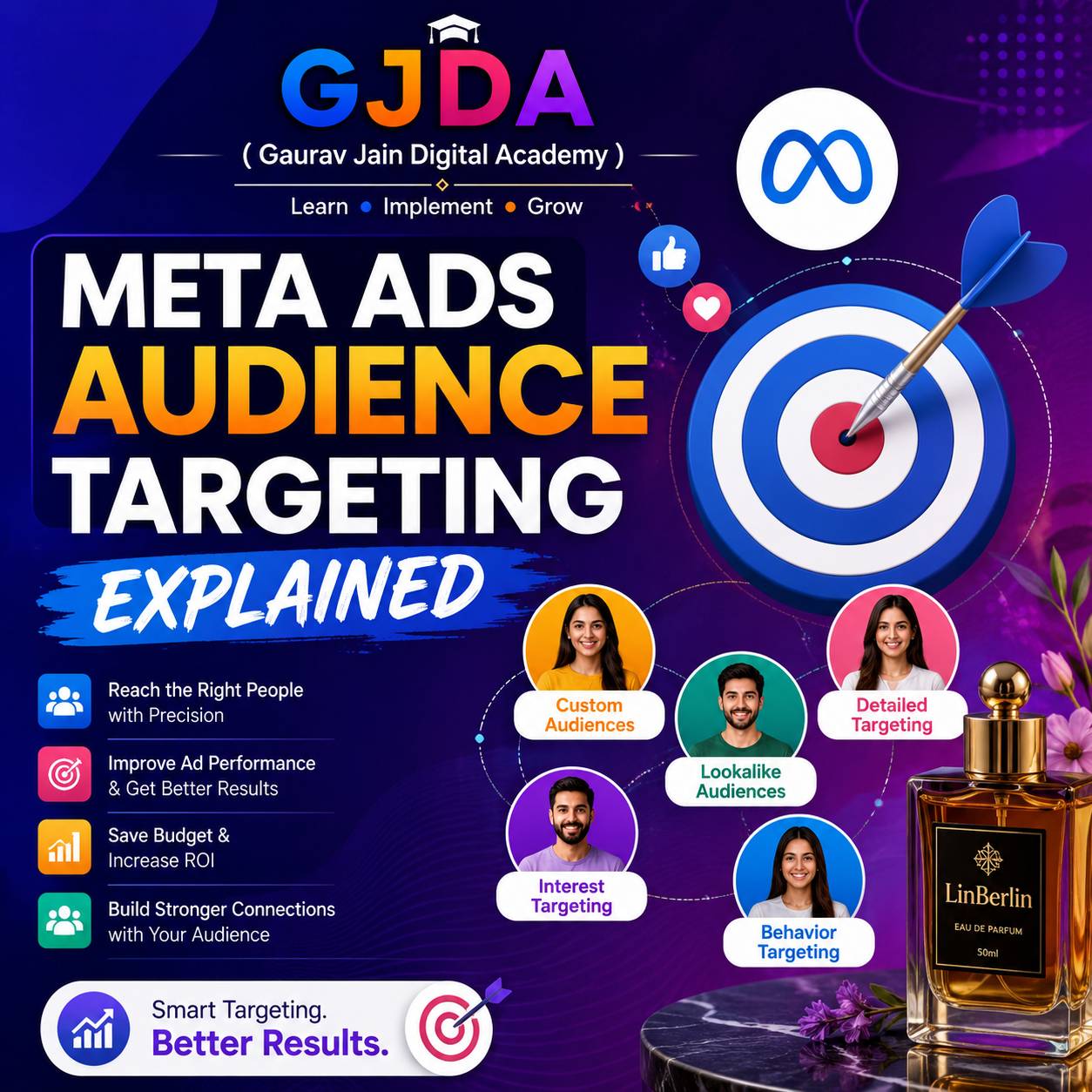
- Use Advantage+ Audience for most prospecting campaigns, feeding it your best available signals as starting hints rather than treating your inputs as hard boundaries the way older targeting did
- Keep your total audience size reasonably broad — Meta's own guidance points to somewhere around 2 to 10 million people for most campaigns, since going narrower tends to increase cost per result by starving the auction of enough people to optimize within
- Layer in Custom Audiences built from your actual customer lists for retargeting specifically, since first-party data remains one of the strongest signals available, especially with third-party tracking increasingly restricted
Creative Checklist Items
- Run at least three to five genuinely different creative angles per ad set rather than minor variations of the same idea — different hooks now do more of the audience-filtering work that manual targeting used to handle
- Watch your frequency metric, especially on smaller audiences; climbing frequency alongside falling click-through rate is usually the earliest sign of creative fatigue setting in
- Refresh creative on a fixed schedule rather than waiting until performance visibly drops — by the time a drop shows up in the data, you've usually already been losing efficiency for a week or more
A Hypothetical Example Worth Walking Through
To stay strictly accurate about what's a documented pattern versus a specific case, here's a hypothetical rather than a real client account: imagine a small business running six separate ad sets, each targeting a slightly different interest cluster around the same product, with a combined daily budget spread thin across all six. Based on how Meta's Advantage+ system is documented to behave, this structure would likely underperform, since none of the six ad sets accumulates enough conversion volume individually for the algorithm to optimize confidently, and they're effectively bidding against each other for overlapping audiences. Consolidating those six into a single Advantage+ Audience campaign, with the same total budget pooled together and fed the account's strongest conversion event, should in principle give the algorithm considerably more data per learning cycle. Whether the improvement matches any specific number depends entirely on the account's actual conversion volume, competition in that category, and creative quality — there's no fixed guarantee here, and I'd be wary of anyone claiming otherwise without seeing the actual account.
Benefits of Working Through This Checklist Properly
The most immediate benefit is avoiding wasted learning-phase spend — every time an account gets restructured unnecessarily or a conversion event gets swapped out, some of the data the algorithm had already built up gets reset. There's a diagnostic value too: once you understand these tiers, you can actually pinpoint whether a struggling campaign has a signal problem, a structure problem, or a genuine creative fatigue problem, rather than changing everything at once and never knowing what actually helped.
Challenges Worth Knowing Upfront
Trusting the automation is genuinely difficult for anyone trained on manual, interest-based targeting, and that trust has to be built gradually as you watch results over a full learning cycle rather than judging day by day. Small accounts face a real limitation here too — with only a handful of weekly conversions, Advantage+ has very little to learn from, and results can stay inconsistent for weeks in a way that no checklist item alone can fix. It genuinely depends on volume, and that's an honest limitation rather than a clean rule.
Common Mistakes to Avoid
- Pausing a new campaign after two or three days because early results look weak, when the system typically needs one to two weeks minimum to gather enough data to optimize properly
- Running narrow audience sizes under roughly 2 million people out of habit from older targeting practices, which tends to raise cost per result rather than improve relevance
- Treating creative as a one-time setup rather than an ongoing testing cycle, so the same three ad variations run untouched for months while performance quietly declines
- Ignoring event match quality scores entirely, even though a low score is often the actual root cause behind a campaign that "should be working" but isn't
Best Practices Worth Adopting
Let new or restructured campaigns run untouched for at least seven to fourteen days before making changes, and resist the urge to judge performance from the first few days of data alone. Feed the algorithm your best conversion signal consistently across campaigns rather than switching optimization events frequently, since each switch effectively restarts part of the learning process. Build creative testing into your regular routine rather than treating it as a reaction to declining performance — testing while things are working well tends to catch fatigue before it actually costs you results.
Useful Tools for This Checklist
Meta Events Manager is where you'll check pixel health and event match quality, and it's worth reviewing before touching any targeting settings. Meta Ads Manager's own delivery insights and breakdown reports tell you more about what the algorithm is actually doing than most third-party dashboards. Since paid social and paid search increasingly work together in a full marketing strategy, it's worth understanding how a comparable checklist works on the other major ad platform too — there's a detailed Google Ads optimization checklist covering the equivalent structure and signal-quality principles for that platform specifically.
Career Opportunities Tied to This Skill
Understanding signal quality and account structure on Meta remains a genuinely in-demand skill for performance marketing roles, and if anything, the shift toward automation has raised the value of people who know when to trust the algorithm and when to step in — that judgment call is exactly what a fully automated system can't make on its own. If you're newer to the platform and want the fuller picture of setting up a campaign from scratch before optimizing one, there's a detailed walkthrough in this guide to building a high-converting Meta Ads campaign worth reading alongside this checklist.
Practical Assignment
Pick a live or practice Meta Ads account. Start with the signal quality tier — check your event match quality score in Events Manager and confirm which conversion event your active campaigns are actually optimizing toward. Then move to structure: count how many ad sets are running the same objective toward overlapping audiences, and consolidate where it makes sense. Finally, audit your creative — how many genuinely different angles are running per ad set right now, and when was the last time any of them changed? Document what you find at each tier before making changes, so you have a clear before-and-after record. If your account also sells through marketplaces like Flipkart, it's worth running a parallel check using a dedicated Flipkart seller growth checklist, since ad signal quality and listing quality tend to reinforce each other across channels.
Frequently Asked Questions
1. How often should I optimize a Meta Ads campaign?
Daily monitoring for anomalies is fine, but structural or targeting changes should generally wait for a full seven-to-fourteen-day review cycle so the algorithm has enough data to judge fairly.
2. Is manual audience targeting completely obsolete now?
Not entirely gone, but for most objectives your manual inputs function as starting hints for Advantage+ Audience rather than strict boundaries, which is a real shift from how targeting used to work.
3. What audience size should I aim for on Meta?
Meta's own guidance suggests roughly 2 to 10 million people for most campaigns; going narrower tends to raise cost per result by limiting the auction pool.
4. How do I know if my account has a signal quality problem?
Check your event match quality score in Events Manager and compare your Pixel and Conversions API event counts — a mismatch or a low match score usually points directly to the issue.
5. Should I optimize toward add-to-cart or purchase events?
Purchase, generally, if your account has enough purchase volume to support it. It's a stronger signal even though it happens less frequently than add-to-cart.
6. How long should I wait before judging a new campaign's performance?
At least seven to fourteen days of stable settings, giving the algorithm time to move past its early learning phase.
7. What's the biggest sign of creative fatigue?
Rising frequency alongside falling click-through rate on the same ad set is usually the clearest early signal, often showing up before overall performance visibly drops.
8. Does Advantage+ work well for small businesses with limited budgets?
It can, but with low weekly conversion volume the algorithm has less data to learn from, so results are often less stable in the first few weeks compared to higher-volume accounts.
9. Should I run separate ad sets to test different audiences?
Generally no, not with the way Advantage+ works now. Fragmenting the same objective across multiple ad sets usually creates internal competition rather than useful comparison data.
10. How many creative variations should run per ad set?
Three to five genuinely different angles tends to work better than either a single ad or a dozen minor variations of the same concept.
Wrapping This Up
None of this requires an advertising background to work through properly — it requires patience, a fixed review schedule, and enough trust in the automation to let it actually do the job once your signal quality and structure are solid. Rushing structural changes or judging results too early tends to undo more progress than any single setting adjustment can fix. If you want to work through account audits and campaign structure hands-on with feedback rather than piecing this together alone, our Meta Ads Training covers exactly this kind of practical, checklist-driven approach. If you're newer to paid social altogether, the beginner's course curriculum builds up from the fundamentals before getting into optimization work like this. And if you'd like to talk through where your own account currently stands, you're welcome to reach out through our institute directly.
The habit worth keeping from all of this isn't any single setting — it's the discipline of checking signal before structure and structure before creative, in that order, every time something isn't working the way you expected