I've sat across the table from a fair number of hiring managers over the years — sometimes as the trainer prepping a student for the interview, sometimes helping a small business owner figure out what to even ask a candidate. And the pattern is always the same. Ecommerce marketing interviews rarely test whether you've memorized definitions. They test whether you've actually run a campaign, watched it fail, and figured out why.
This article isn't a list of questions copied off some job portal. It's built the way I'd actually prep someone in a classroom — question, what the interviewer is really checking for, and how to answer it without sounding rehearsed. If you're a beginner walking into your first ecommerce marketing interview, a small business owner trying to understand what your marketing hire should know, or a working professional switching from general digital marketing into ecommerce specifically, this should cover what you need without sending you off to five other tabs.
What is Ecommerce Marketing Interview Preparation?
It's not just rehearsing answers. Preparing for an ecommerce marketing interview means understanding the buyer journey on an online store — discovery, consideration, cart, checkout, retention — and being able to speak about each stage with a specific channel or tactic attached to it. Generic digital marketing knowledge (SEO basics, social media posting, running ads) only gets you halfway. Ecommerce interviewers dig into things like cart abandonment recovery, product feed optimization, marketplace algorithms (Amazon, Flipkart), and post-purchase retention — areas that don't come up much in, say, a service-industry marketing role.
A lot of candidates walk in prepared to talk about "driving traffic" and get stuck the moment the interviewer asks what happens after someone adds a product to cart and leaves. That gap — between traffic generation and actual revenue — is where most ecommerce interviews live.
Why This Topic Matters
Ecommerce is one of the few areas of digital marketing where the ROI is measured in rupees within the same session, not weeks later through a lead-nurture funnel. That immediacy changes what employers look for. They're not just hiring someone who understands marketing theory — they want someone who can look at a Shopify or WooCommerce dashboard and tell them why conversion rate dropped 1.2% last week.
Here's the thing — ecommerce marketing roles have grown faster than most other digital marketing specializations in India over the past few years, partly because so many small manufacturers, D2C brands, and traditional retailers moved online and needed people who understood both marketing and the mechanics of online selling. If you can speak fluently about product listing optimization, retargeting, and marketplace ads in the same breath, you're already ahead of most candidates who only know one side of it.
How Ecommerce Marketing Interviews Actually Work
Most interviews I've seen (and helped prepare students for) follow a loose three-part structure, even if the interviewer doesn't say so out loud:
- Fundamentals check — do you know the terms, the tools, the basic funnel stages, and can you explain them without jargon?
- Applied scenario — "Our cart abandonment rate is 70%, what would you check first?" This is where they see how you think, not what you've memorized.
- Cultural and role fit — can you work with limited budget, small teams, and fast-changing product catalogs? Ecommerce moves quicker than most other marketing environments, and interviewers want to know you won't freeze when a flash sale needs a landing page in four hours.
Knowing this structure changes how you prepare. Don't just memorize answers — practice explaining your reasoning out loud, because that second stage is usually where offers are won or lost.
A Hypothetical Interview Walkthrough
Let's say you're interviewing for a Marketing Executive role at a small D2C skincare brand (this is a hypothetical example, not a real case). The interviewer opens with "Walk me through how you'd market a new product launch on our online store." A weak answer jumps straight to "I'd run Facebook and Instagram ads." A stronger answer walks through the funnel: pre-launch email teaser to existing customers, influencer seeding for organic buzz, a dedicated landing page with clear product benefits, retargeting ads for people who visited but didn't buy, and a post-purchase email flow to encourage reviews and repeat purchase. Notice the second answer doesn't need to mention a single ad platform to sound competent — it shows you understand the full journey, not just the ad-spend part of it.
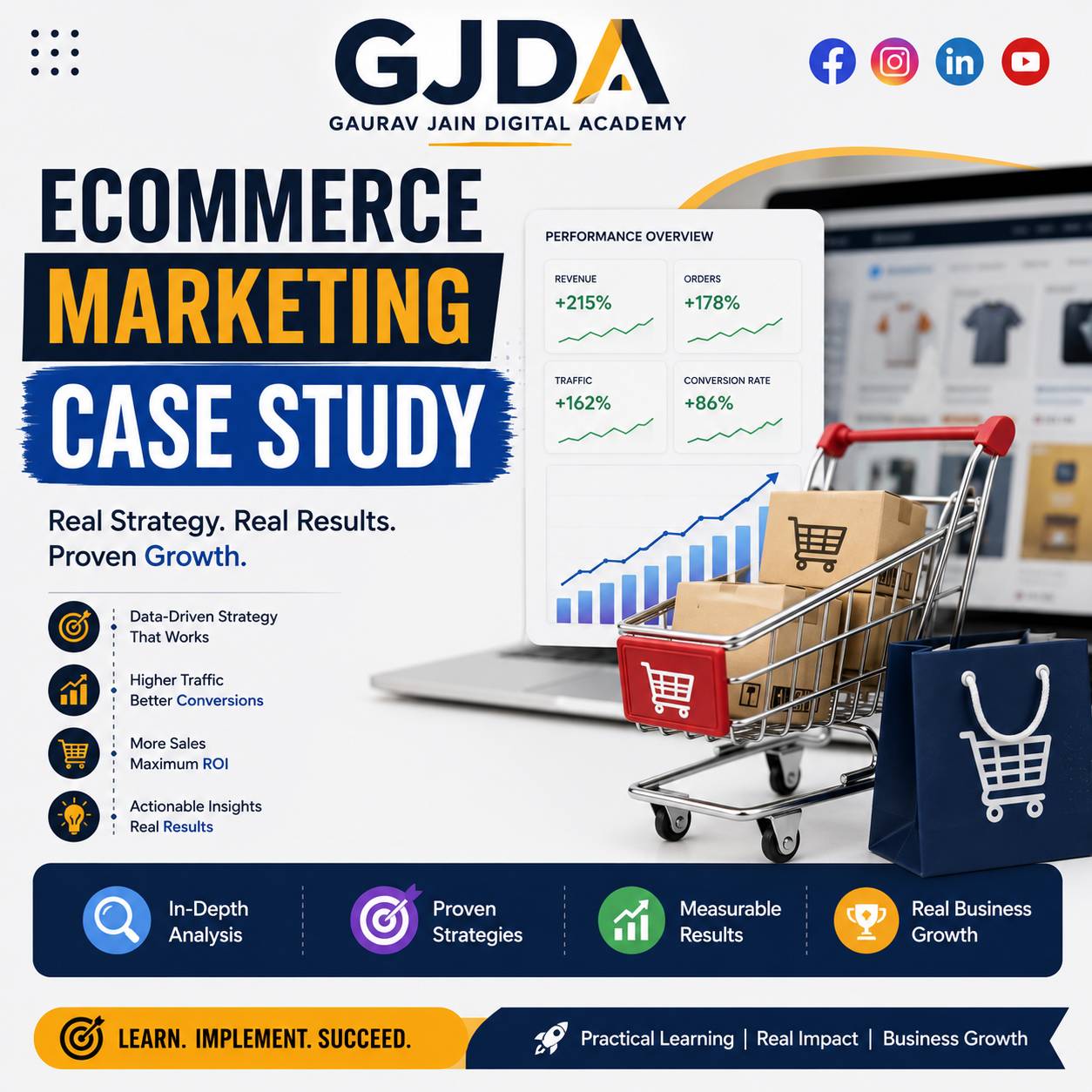
If you want to see how this plays out with real numbers and channel breakdowns, it's worth reading through a practical ecommerce marketing case study that shows how these pieces connect in an actual campaign.
Benefits of Being Ecommerce-Interview Ready
Being genuinely prepared — not just answer-rehearsed — pays off in a few ways. You negotiate better because you can justify your value with specifics instead of general enthusiasm. You get shortlisted faster because recruiters screening resumes and doing first-round calls can tell within two minutes whether someone understands the space or is reciting a course syllabus. And honestly, you waste less of your own time — walking into interviews unprepared and getting rejected is demoralizing and slow; walking in with real understanding, even if you don't get every offer, keeps your confidence intact.
Challenges Candidates Face
The biggest one I see repeatedly: candidates learn tools but not trade-offs. They can tell you what Google Shopping ads are but can't tell you when they wouldn't recommend them (low-margin products, for instance, where ad spend eats the profit). Interviewers notice this gap immediately.
Another real challenge — and this one isn't talked about enough — is that ecommerce marketing sits between marketing, operations, and sometimes even inventory management. A candidate might be excellent at running ads but stumble when asked how they'd handle a sudden stock-out during a sale campaign. That's not strictly a "marketing" question, but it comes up often in ecommerce interviews specifically because the two are so tightly linked.
Common Mistakes Candidates Make
| Mistake | Why It Hurts | Better Approach |
|---|---|---|
| Only talking about traffic, never conversion | Shows you don't understand the funnel beyond awareness | Always connect traffic tactics to a conversion or retention outcome |
| Memorizing definitions word-for-word | Sounds robotic, doesn't survive follow-up questions | Understand the "why" behind each concept so you can explain it in your own words |
| Ignoring post-purchase marketing entirely | Employers value repeat customers as much as new ones, sometimes more | Prepare at least one answer on email/WhatsApp retention flows |
| Not knowing basic ecommerce metrics (AOV, CAC, CLV) | These are the language of the role — not knowing them is a red flag | Learn the formulas and, more importantly, what a "good" number looks like in context |
Best Practices for Interview Preparation
Practice answering out loud, not just reading through notes silently — it's a different skill and interviewers can tell the difference. Build one small personal project, even a dummy Shopify store with a few products, so you have something real to reference instead of hypotheticals every single time. Read one or two real case studies from brands you admire and be ready to critique their approach, not just praise it; interviewers like candidates who can spot what could've been done differently.
It also helps to brush up on adjacent areas. A lot of ecommerce marketing questions overlap with broader digital marketing and paid ads knowledge, so reviewing common digital marketing interview questions and, separately, Google Ads interview preparation material rounds out gaps that pure ecommerce content sometimes skips over.
Useful Tools Worth Knowing Before the Interview
- Google Analytics 4 — for understanding funnel drop-off and conversion paths, even at a basic level
- Google Merchant Center — if the role touches Shopping ads or product feeds
- Meta Ads Manager — most D2C brands still lean heavily on Facebook and Instagram
- Klaviyo or Mailchimp — for email flows, especially cart recovery and post-purchase sequences
- SEMrush or Ubersuggest (even free versions) — basic keyword and competitor research familiarity goes a long way
You don't need to be an expert in all of these before an interview. But being able to say "I've used GA4 to check where users drop off in the checkout flow" carries far more weight than saying "I know analytics."
Career Opportunities in Ecommerce Marketing
Roles range from Ecommerce Marketing Executive and Performance Marketing Specialist to Marketplace Manager (handling Amazon/Flipkart seller accounts specifically) and Retention/CRM Marketer. Small businesses often hire generalists who do a bit of everything, while larger D2C brands and marketplaces tend to split these into specialized roles. If you're just starting out, a generalist role at a smaller company can actually teach you more breadth in less time — something worth mentioning if an interviewer asks why you're considering a smaller company over a bigger brand.
Practical Assignment
Pick any ecommerce website you shop from regularly. Go through their entire buying journey — homepage, product page, cart, checkout — and note down three things they do well and two things you'd improve. Then write a two-line answer for how you'd explain each improvement if an interviewer asked "why." This single exercise, done properly, will prepare you for more interview questions than reading a hundred FAQ lists.
Frequently Asked Questions
What is the difference between digital marketing and ecommerce marketing in an interview context?
Digital marketing is broader — SEO, content, social, ads across any business type. Ecommerce marketing is digital marketing applied specifically to online selling, so it includes product feed optimization, cart recovery, marketplace strategy, and conversion rate optimization, things a pure content-marketing or B2B lead-gen role wouldn't touch.
Do I need coding knowledge for ecommerce marketing roles?
No, not for most executive or specialist-level roles. Basic comfort with platforms like Shopify or WooCommerce dashboards helps, but writing code isn't expected unless you're aiming for a technical ecommerce role.
What is cart abandonment and why do interviewers ask about it so much?
It's when a shopper adds items to cart but leaves without completing the purchase. Interviewers ask about it because recovering even a small percentage of abandoned carts is often cheaper than acquiring new customers — and it tests whether you think about revenue recovery, not just traffic generation.
What metrics should I know before an ecommerce marketing interview?
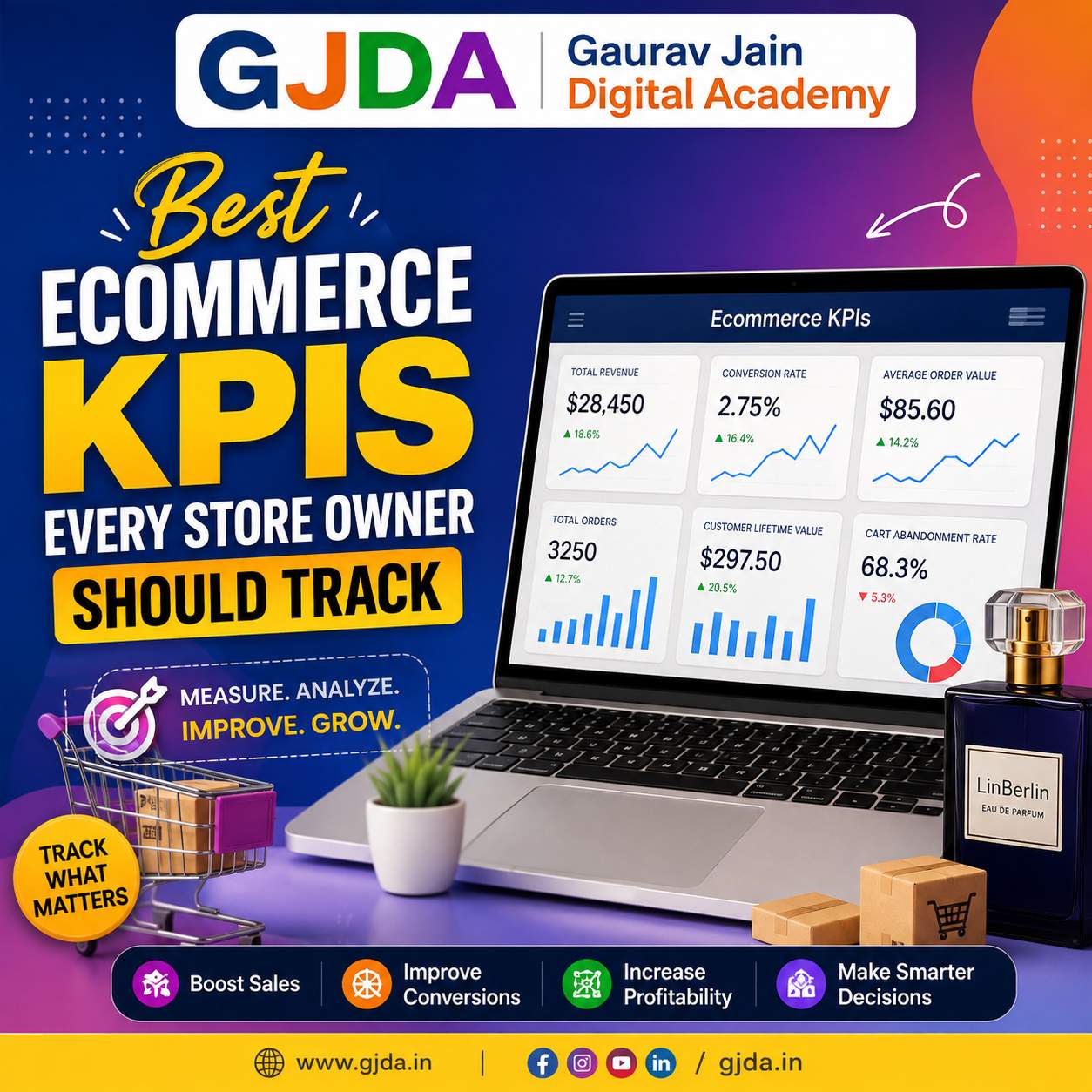
At minimum: Conversion Rate, Average Order Value (AOV), Customer Acquisition Cost (CAC), Customer Lifetime Value (CLV), and Cart Abandonment Rate. Know the formulas, but more importantly, be ready to discuss what a healthy range looks like for a given business size — there isn't one universal "good number."
Is social media marketing knowledge required for ecommerce marketing jobs?
Usually yes, at least a working level, since paid social is a major acquisition channel for most online stores. It's worth reviewing some social media marketing interview questions and answers alongside your ecommerce prep, since the two overlap more than people expect.
How important is SEO for ecommerce marketing interviews?
Fairly important, especially for organic-heavy brands. Interviewers may ask about product page optimization, category page structuring, or handling duplicate content across product variants. If SEO isn't your strongest area, it's worth reviewing SEO interview questions for freshers to fill that gap before your interview.
What if I don't have real campaign experience yet?
Be honest about it, but back it with a self-run project — even a small dummy store or a personal Instagram shop experiment. Interviewers generally respect honesty over inflated claims, and a small real project beats a vague "I've studied the concepts" answer every time.
Should I bring a portfolio to an ecommerce marketing interview?
If you have one, yes — even screenshots of ad creatives you've made, email sequences you've drafted, or analytics dashboards you've worked with. It doesn't need to be formal. A simple PDF or even a shared Google Doc works fine for most small business or startup interviews.
What's a common trick question in ecommerce marketing interviews?
"If you had a limited budget, would you spend it on acquisition or retention?" There's no single correct answer — it depends on the business stage. A new brand usually needs acquisition first; an established one with a decent customer base often gets better ROI from retention. Interviewers want to see that you understand the trade-off, not that you pick a "correct" side.
How long does it typically take to prepare for an ecommerce marketing interview?
It varies a lot depending on your existing base knowledge. Someone with hands-on tool experience might need just a week of focused review; a complete beginner might need a few weeks of structured learning first. Rushing it rarely helps — interviewers can usually tell the difference between understanding and last-minute memorization.
Conclusion
Ecommerce marketing interviews reward people who understand the full customer journey, not just the parts that show up in a media plan. If there's one thing I'd tell every student walking into one of these interviews, it's this: stop trying to sound like a textbook. Talk like someone who's actually looked at a cart abandonment report and wondered why. That instinct — curiosity about the "why" behind the numbers — is what most interviewers are actually screening for, even when the question sounds like a simple definition check.
If you want structured, hands-on preparation instead of piecing it together from scattered articles, our Ecommerce Marketing Training at GJDA covers these concepts with real tool practice. You can also explore the course curriculum or visit our academy's website to see how the training is structured before deciding if it's right for you.