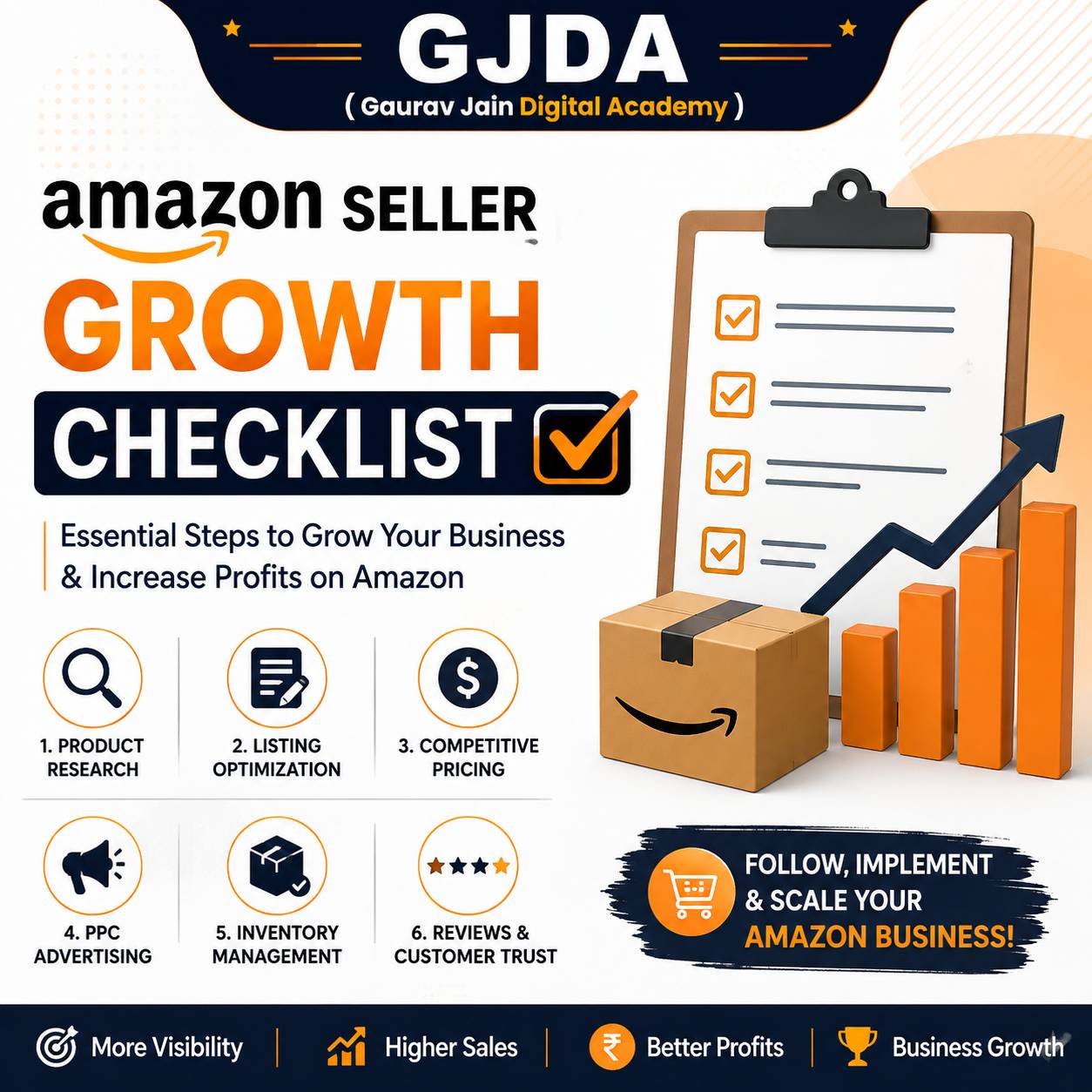
If you've got an Amazon seller interview coming up and you're frantically googling "what will they ask me" — take a breath first. Most candidates walk in prepared to talk about product listings and PPC campaigns, then get stuck on a question about return rates or FBA fee structures and freeze. That gap between knowing the tools and understanding the business is exactly what interviewers are probing for.
This isn't a copy-paste question bank. It's a walkthrough of what actually gets asked in Amazon seller support, account management, and e-commerce operations interviews across India right now — and more importantly, why interviewers ask those specific things.
What is an Amazon Seller Role, Really?
Ask five people what an "Amazon seller executive" does and you'll get five different answers. That's the first thing to sort out before an interview, because the job title tells you almost nothing on its own.
In practice, the role usually falls into one of these buckets:
- Seller account management — listing products, handling inventory, managing FBA shipments, tracking account health
- PPC and advertising — running Sponsored Products, Sponsored Brands, and Sponsored Display campaigns for a seller or agency
- Catalog and content — writing titles, bullet points, backend keywords, A+ Content
- Customer service and operations — handling returns, disputes, A-to-z claims, and Amazon policy compliance
- Full-service seller consulting — where you're expected to touch all of the above for a client
A small agency in Meerut or Ghaziabad might expect one person to wear all these hats. A larger company hiring for a "brand management" seat will interview you narrowly on advertising or catalog work alone. Know which one you're walking into — check the job description twice, not once — because the interview questions shift depending on which bucket you land in.
Why This Matters for Your Interview Prep
Here's the thing most candidates miss: Amazon seller interviews aren't really testing whether you've memorised menu paths in Seller Central. They're testing whether you understand why a listing isn't converting, why an account got suspended, or why ad spend went up without sales following. Anyone can learn where a button is. Fewer people can explain the reasoning behind a decision.
That distinction shows up constantly in how interviewers phrase questions. Instead of "What is Seller Central," you'll often get "A client's listing has good traffic but poor conversion — what would you check first?" The tool knowledge is assumed. The judgment is what's being scored.
Employers in this space — whether it's a growing D2C brand, an Amazon and Flipkart seller operation, or a marketing agency managing multiple brand accounts — are usually short-staffed and need someone who can think through a problem on day one, not someone who needs six months of hand-holding.
How the Interview Process Actually Works
Most Amazon seller interviews I've seen candidates go through follow a fairly predictable rhythm, though it varies by company size.
Round one is usually a screening call — HR or a recruiter checking your basic understanding of e-commerce, your comfort with tools like Excel or Google Sheets, and sometimes your familiarity with Seller Central terminology. This round eliminates people who genuinely don't know the space at all.
Round two is the technical or functional round, run by whoever manages the seller accounts or the team you'd join. This is where the real questions live — listing optimisation, account health metrics, keyword research, sometimes a live screen-share where you're asked to navigate Seller Central or Amazon Ads console. If you've never actually logged into a Seller Central dashboard before this interview, that will show within two minutes.
Round three, if there is one, tends to be a case-study or scenario round. You might be handed a mock ASIN with a conversion problem, or a sudden drop in Buy Box percentage, and asked to walk through your diagnosis out loud. This is less about the "right" answer and more about whether your thought process is structured.
| Round | What's Being Tested | How to Prepare |
|---|---|---|
| Screening Call | Basic e-commerce awareness, communication | Know common terms: ASIN, FBA, FBM, Buy Box, ACOS |
| Technical Round | Platform knowledge, real workflow familiarity | Practice inside an actual Seller Central demo or your own account |
| Case Study Round | Problem-solving and judgment under pressure | Think in "check this, then this" sequences, not memorised answers |
A Practical Example: The Conversion-Rate Question
Let's take a hypothetical scenario, the kind that comes up often in this type of interview. Suppose the interviewer says: "A seller's product page gets 3,000 sessions a week but only converts at 4%, while the category average is closer to 12%. What would you look at?"
A weak answer jumps straight to "I'd run more ads." That answer tells the interviewer you don't understand that traffic and conversion are two separate problems.
A stronger answer walks through it in layers: check the main image first — is it clear, does it meet Amazon's white-background requirement, does it actually show the product being used. Then the price — is it competitive against similar listings on the same search page. Then reviews and rating — a 3.2-star product will always underconvert no matter how good the copy is. Then check if the Buy Box is even being won consistently, because ads driving traffic to a listing that's losing the Buy Box half the time is money down the drain.
None of that requires memorising a script. It requires understanding that conversion is a chain, and something in that chain is broken. That's the difference interviewers are actually listening for.
Benefits of Preparing This Way
Rote-memorising 50 questions and answers gets you through maybe the first two or three minutes of an interview before the interviewer deviates from the script — and they usually do, because experienced hiring managers can smell a memorised answer within seconds.
Preparing around the "why" instead gives you flexibility. You can answer a differently-worded version of the same question, you can push back gently on an interviewer's assumption if it's wrong, and — this matters more than people think — you sound like someone who's actually worked inside an account, not someone reciting a blog post.
It also just makes the job easier once you get it. Real accounts don't hand you clean, textbook problems. They hand you three overlapping issues at once, and you're expected to prioritise.
Challenges Candidates Usually Run Into
Most beginners haven't actually worked inside a live Seller Central account, and that's not their fault — Amazon doesn't let you create a seller account just to poke around for practice without registering a real business or paying the subscription fee. So a lot of preparation ends up being theoretical, which interviewers can usually tell.
Another common issue: candidates confuse Amazon seller terminology with general digital marketing terms, or with Flipkart/Meesho seller panel terms, which look similar but aren't identical. ACOS and ROAS get mixed up constantly, for instance — ACOS is ad spend divided by ad sales, ROAS is the inverse ratio, and mixing them up in an interview is an instant red flag to anyone who runs ad accounts daily.
A third challenge, and I'll be honest about this one — a lot of candidates over-prepare on advertising metrics and under-prepare on account health, policy violations, and returns handling. Those unglamorous topics come up in interviews just as often, sometimes more, especially for operations-focused roles.
Common Mistakes to Avoid
A few patterns show up again and again:
- Treating "I've read about it" the same as "I've done it" — interviewers ask follow-up questions specifically to catch this
- Not knowing the difference between FBA and FBM well enough to explain trade-offs, only definitions
- Giving generic digital marketing answers when asked about Amazon specifically — Amazon SEO and Google SEO share some logic but work quite differently in practice
- Panicking on numeric questions (calculating ACOS, break-even ROAS, or referral fee impact on margin) instead of just working through the math slowly out loud
That last one is worth sitting with. Interviewers generally don't expect instant mental math. They expect you to not go blank.
Best Practices Before Your Interview
If you have even a week before the interview, spend it doing these things rather than reading more question lists:
- Create a free Amazon seller account (even without going live) just to see the actual interface — Inventory, Advertising, and Performance tabs specifically
- Pick three real products on Amazon India and reverse-engineer their listings — what keywords are likely in the title, what the images are doing, what the review pattern looks like
- Learn the core formulas cold: ACOS, TACOS, referral fee percentage ranges by category, and how FBA fees are structured by weight and size tier
- Practice explaining one concept — say, the Buy Box — out loud to someone who knows nothing about e-commerce. If they understand you, you've actually understood it
Realistically, the candidates who stand out aren't the ones with the most information memorised. They're the ones who can explain a concept simply, admit when something's outside their experience, and reason through a scenario instead of guessing.
Useful Tools to Know Before the Interview
You don't need to be an expert in all of these, but recognising the names and roughly what each does matters:
- Amazon Seller Central — the core dashboard for listings, orders, inventory, and performance
- Amazon Advertising Console — for Sponsored Products, Brands, and Display campaigns
- Helium 10 or Jungle Scout — third-party keyword research and product research tools widely used by sellers and agencies
- Google Sheets or Excel — for tracking ACOS, inventory forecasts, and reporting; underrated but asked about constantly
- Canva or Photoshop — basic image editing, since listing images often need quick fixes
Career Opportunities in This Field
The Amazon seller ecosystem in India has grown into a genuine career track, not just a side gig. Roles range from in-house e-commerce executive at a manufacturing brand, to account manager at a marketing agency handling multiple seller clients, to eventually running your own seller account or consultancy.
It also connects naturally with adjacent skills — someone comfortable with Amazon Ads usually picks up Google Ads concepts faster than a complete beginner would, and vice versa, because the auction logic behind both platforms overlaps quite a bit. Similarly, catalog and listing work borrows heavily from on-page SEO principles, even though Amazon's algorithm (A9/A10) has its own quirks around conversion-weighted ranking rather than backlinks and domain authority. If you're figuring out where this role fits in your broader digital marketing career path, it's worth comparing it against related openings — the kind of questions asked in general digital marketing interviews or in ecommerce marketing interviews overlap with this one more than you'd expect, especially at the fresher level.
Practical Assignment
Before your next interview, try this exercise. Pick any product category you're interested in — kitchen appliances, phone accessories, whatever — and go find three competing listings on Amazon India. For each one, write down:
- What you think the main keyword in their title is, and whether it seems intentional or accidental
- One thing wrong with their main image or gallery that you'd fix
- Their approximate star rating and review count, and whether you think that alone explains their ranking position
Then write two sentences on which of the three you'd want to be selling, and why. This takes maybe twenty minutes and teaches you more than reading another list of definitions would.
Frequently Asked Questions
Do I need to already have sold on Amazon to get hired?
No, not for entry-level roles. Most freshers get hired based on their understanding of the platform and their ability to think through problems, not prior selling history. Having even a demo account you've explored helps, though.
What's the difference between FBA and FBM, and will I be asked to explain the trade-off?
Yes, almost certainly. FBA (Fulfilled by Amazon) means Amazon stores, packs, and ships the product, and you pay storage and fulfilment fees. FBM (Fulfilled by Merchant) means you handle shipping yourself. FBA usually wins the Buy Box more easily and qualifies for Prime, but eats into margins through fees; FBM gives more control but shifts the shipping burden and speed expectations onto the seller.
Is Amazon SEO the same as Google SEO?
Related, not the same. Amazon's A9/A10 algorithm weighs conversion rate, sales velocity, and relevance to buyer intent far more heavily than backlinks or domain authority, which matter a lot in Google SEO. Keyword placement still matters on both, but the ranking logic underneath is different.
What if I don't know the answer to a technical question in the interview?
Say so, honestly, and then reason toward an answer anyway. Interviewers generally respect "I haven't worked with that directly, but based on how similar features work, I'd guess..." far more than a confident wrong answer.
How important is Excel for this role?
More than most candidates expect. Tracking ACOS trends, inventory reorder points, and profit margins across dozens of SKUs happens in spreadsheets constantly, even at companies using fancier software layered on top.
Will I be asked to calculate numbers like ACOS or referral fees during the interview?
Often, yes, especially in technical or case-study rounds. Keep the formulas straight: ACOS = (Ad Spend ÷ Ad Sales) × 100. Referral fees vary by category, typically somewhere between 5% and 20%, and it's fine to say "it depends on category" rather than quoting one fixed number as universal.
Do interviewers expect me to know about Amazon account suspensions?
For operations or account management roles, yes, at least at a conceptual level — what triggers a suspension (policy violations, IP complaints, late shipment rate, order defect rate) and roughly how the appeal process works.
Is this role only for people who studied marketing?
No. Some of the sharpest people in this field come from commerce, operations, or even unrelated backgrounds, because the job leans heavily on analytical thinking and attention to detail, not a specific degree.
How long does it typically take to become interview-ready for this role?
It depends heavily on how much hands-on practice you get versus passive reading. Someone spending focused time inside actual tools and mock scenarios can often be ready within a few weeks; someone only reading question banks may take much longer and still struggle with scenario questions.
Conclusion
Amazon seller interviews reward people who understand the reasoning behind decisions — not people who've memorised the most terms. Learn the vocabulary, yes, but spend more of your time actually clicking through a Seller Central account, working through mock scenarios, and getting comfortable saying "I don't know, but here's how I'd figure it out."
If you want structured, hands-on guidance instead of piecing this together from scattered articles, our Amazon Seller Training program at GJDA is built around exactly this kind of practical, scenario-based learning. You can explore the course curriculum to see what's covered, or visit our academy to learn more about how the training is structured for beginners and working professionals alike.