Every semester someone asks me the same thing: "Sir, how do I make a video go viral?" And every semester I give the same slightly disappointing answer. You can't make it happen. You can only make it more likely, and you can decide how you'll behave while you try.
That second part is what this article is about. Plenty of people chase reach with fake giveaways, borrowed photos, outrage bait and made-up claims. Some of them do get views. Many also get blocked, reported, or quietly forgotten once the spike ends. If you run a small business, study marketing, or manage a brand's page, a spike you can't be proud of is a poor trade.
So let's talk about how to earn attention honestly, why it works when it works, and where it simply won't.
What "viral" actually means (and what ethical adds to it)
People hear "viral" and picture a million views. Realistically, it's relative. A post is viral for you when it travels far beyond your usual audience because people chose to share it, save it, or send it to a friend.
"Ethically" simply means you get that spread without deceiving anyone, without exploiting anyone's pain, and without breaking the rules of the platform or the law. No bought followers. No stolen content. No fake urgency. No pretending an ad is a personal opinion.
The person searching for this topic usually wants three things: how virality works, what is acceptable, and what to do on Monday morning. I'll cover all three.
Why it matters more than the view count
Attention that comes from a trick tends to bring the wrong crowd. Suppose a local coaching class posts a fake "free laptop giveaway" to boost reach. The comments fill up with people who want a laptop, not coaching. Reach rises. Enquiries don't. That's a hypothetical, but you've probably seen the pattern on pages in your own city.
There's also the trust problem. A small brand lives on word of mouth. One exposed lie, one copied photo with the original creator calling you out publicly, and the damage travels faster than the post did.
And ethical content fits neatly into long-term planning. If you're building a steady content system rather than gambling on one lucky post, the thinking in this practical guide to content marketing strategy is a good foundation. Viral moments become a bonus on top of a plan, not the plan itself.
How virality works, in plain terms
Nobody outside the platforms knows the exact formulas, and anyone who claims to is guessing. What we can observe is simpler. Content spreads when people have a reason to pass it on.
Those reasons are fairly human:
- It makes them look good. A useful tip, a sharp observation, a funny line they wish they'd written. Sharing it says something nice about the sender.
- It helps someone they know. "This is exactly what my brother needs for his shop." Saves and forwards often come from this feeling.
- It stirs an emotion that isn't contempt. Delight, surprise, pride, relief, a good laugh.
- It's easy. Short, clear, understandable in three seconds with sound off.
Notice what's missing from that list. Anger works too, honestly, and it works often. But anger-driven sharing is exactly where ethics gets tested, because outrage can be manufactured cheaply and it tends to burn bystanders. I'd avoid it as a strategy, even though it's effective in the short term.
If you want a structured way to brainstorm shareable angles, this walkthrough on viral campaign ideas that people actually share covers the idea-generation side in more detail than I can fit here.
A real-world style example (hypothetical)
I'm not going to invent a client story, so here is a made-up but realistic one. Imagine a small stationery shop in Meerut that wants more local attention before exam season.
The shortcut version: post a "tag three friends to win" giveaway with no real prize, copy a trending meme, and buy a few thousand cheap followers. Numbers jump. Nothing else does.
The honest version: the owner films a 25-second clip showing how to make a one-page revision sheet using a ruler and three highlighter colours. She says plainly that she sells those highlighters, in one line, not three. She credits the teacher whose method she borrowed, with permission. Students save it and send it to classmates.
Will it go viral? Maybe not. It depends on timing, luck, and how many people are searching for revision tricks that week. But if it does travel, the people it reaches are exactly the people who might buy a highlighter. That's the difference.
Ethical versus shortcut tactics
| Situation | Shortcut approach | Ethical approach |
|---|---|---|
| Need more reach | Buy followers or likes | Make content people save and forward |
| Want engagement | "Like if you're not a robot" bait | Ask a real question you actually want answered |
| Need images or music | Download from Google, use any trending song | Use your own, licensed, or platform-approved assets |
| Promoting a product | Pretend it's an unpaid personal opinion | Disclose paid or sponsored content clearly |
| Trend appears | Jump on it, even if it's a tragedy | Check the context first, skip if it's not yours to touch |
| Want a hook | Headline the video can't deliver on | A hook that the content actually pays off |
Benefits of doing it the honest way
Your audience is better matched to what you sell, which means fewer wasted clicks. Your account is safer, because platforms do restrict accounts for spam, fake engagement and reused content. You sleep better. And your content keeps working, since a useful post can still be found months later through search and saves, while a trick post is dead within days.
There's one more benefit people overlook: ethical content is easier to repeat. A system based on teaching, showing and answering questions doesn't run out of ideas as quickly as one based on exploiting whatever is trending.
Challenges, and the honest "it depends"
Here's the thing. Ethical content is slower on average, and I won't pretend otherwise. A misleading hook will often beat an honest one in the first few hours. If you need results this week for a deadline, that gap hurts.
Other difficulties:
- Trends move fast, and checking whether a trend is safe takes time you may not feel you have.
- Small teams usually have no one to review consent, copyright and claims before posting.
- Some niches, such as health, finance and education, carry higher stakes for accuracy than others.
There isn't one correct answer for how much risk is acceptable. A meme page and a clinic's page operate under very different standards. Use more caution as the stakes for your reader go up.
Common mistakes I see (and make people unlearn)
Copying a viral format word for word. Using a format is fine. Reposting someone's exact script or video as yours is not.
Using a photo of a real person without asking. Customers, students, even staff. If their face is the point of the post, get permission, preferably in writing, even if it's just a message you keep.
Exaggerating results. "Doubled my sales in 7 days" is a claim, and you need to be able to support it. If you can't, don't say it. Say what actually happened.
Hiding the ad. If a creator was paid, gifted a product, or earns commission, say so clearly. Advertising regulators in India, including ASCI, expect disclosure from influencers, and the rules have been tightening, so it's worth checking the current guidance before you run any paid collaboration.
Chasing every trend. Some trends are about a tragedy, an illness, or a news event. Dropping your product into that moment looks opportunistic, because it is.
Trusting a screenshot. Before sharing a "breaking" claim, find the source. Not the forward, the source.
Best practices that hold up
- Start with a person, not a platform. Write down who this is for and what problem they have this week. Everything else is easier after that.
- Put the value in the first three seconds. Say or show what the viewer gets. If you have to build up to it, many will leave before the payoff.
- Make one idea per post. Not five tips squeezed into one reel.
- Add your own angle. Your experience, your local context, your numbers (real ones). That's what can't be copied.
- Credit sources and creators. It costs nothing and it builds goodwill.
- Do a quick pre-post check: Is it true? Do I have rights to every image and sound? Did everyone shown agree? Is any paid relationship disclosed? Would I be fine if the person mentioned saw this?
- Measure shares and saves, not just likes. They're a better sign that content was useful.
Consistency matters more than people expect. One post rarely carries a brand, but thirty decent ones give you thirty chances. If you need a calendar for that, the approach in this 30-day social media content plan is a sensible way to space out ideas without burning out.
Useful tools
| Tool | Use it for | Watch out for |
|---|---|---|
| Canva | Quick designs, carousels, thumbnails | Check the licence on stock elements for commercial use |
| CapCut or similar editors | Short video editing, captions | Trending audio may not be cleared for business accounts |
| Google Trends | Seeing what people are searching for, and when | Interest isn't the same as appropriateness |
| Platform insights (Meta, YouTube Studio) | Seeing saves, shares, watch time | Small samples mislead, so look at patterns, not single posts |
| Reverse image search | Checking where an image came from before you use it | No result doesn't prove it's free to use |
AI-generated visuals deserve their own caution. They can save time, but you still need to think about misleading realism, look-alike faces, and platform labelling rules. If you plan to use them, read this beginner's guide to AI image generation for marketing first, and label synthetic images when they could be mistaken for real photos.
Career opportunities
If you enjoy this kind of work, there are real roles around it: social media executive, content creator, community manager, brand strategist, and freelance short-video editor. Small businesses in every city need someone who understands both creativity and the rules, and most of them can't afford a full agency.
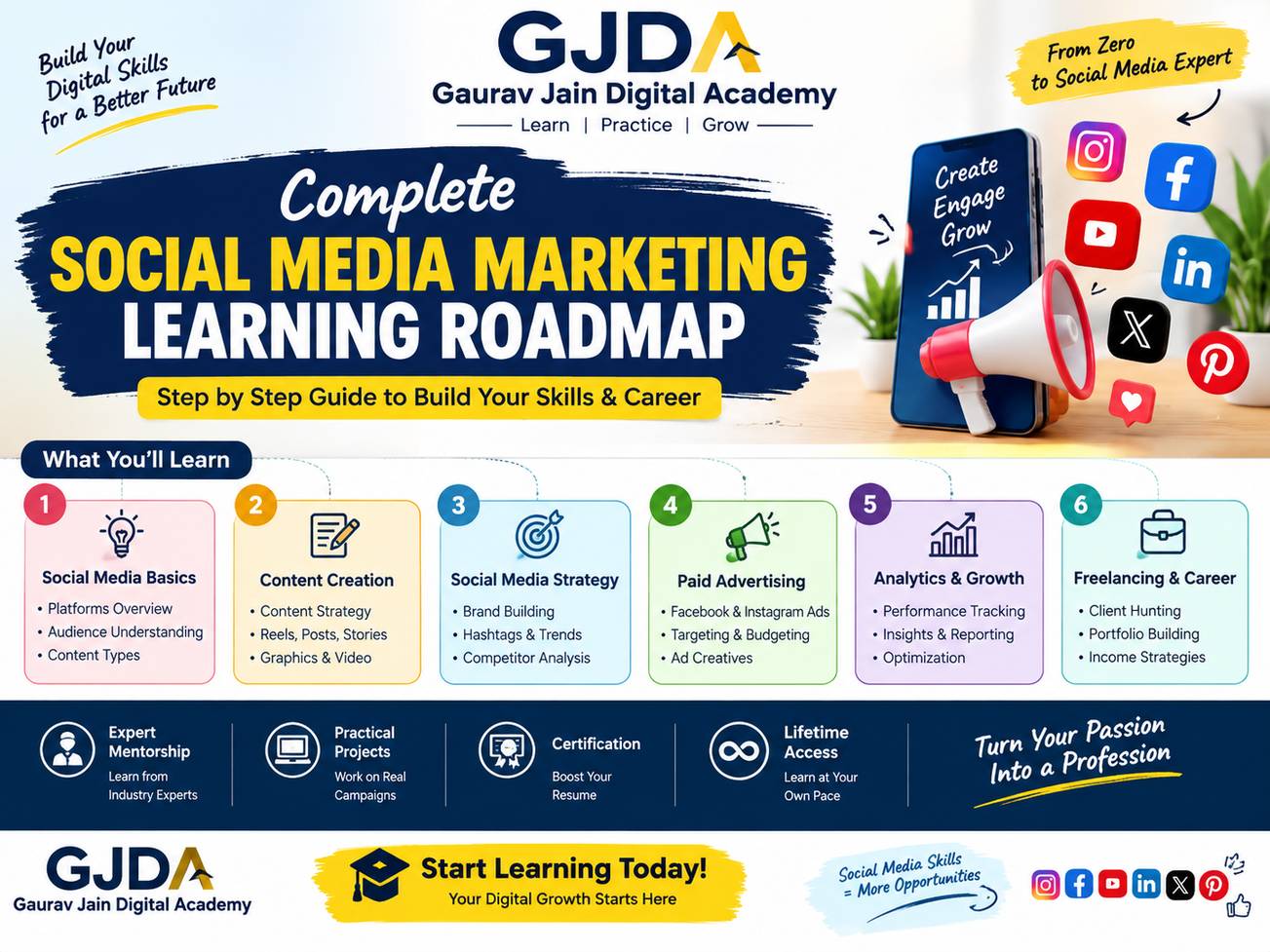
What employers tend to value, in my experience, isn't a single viral post on your portfolio. It's the ability to explain why something worked and to repeat the process responsibly. If you're thinking about learning this in a structured way, our training center runs a social media marketing programme, and the full list of topics is laid out in this complete guide to what we teach. You don't need either to apply what's written here, though.
Practical assignment
Try this over one week. It takes less than an hour a day.
- Pick one real problem your audience has. For a student project, choose a shop near you or an imaginary brand.
- Write the hook in one sentence, then check that your post actually delivers on it.
- Create a 20 to 30 second video or a 5-slide carousel that solves exactly that problem.
- Run the pre-post check from the best practices list. Write the answers down.
- Post it, and note saves, shares, and the type of comments. Ignore likes for now.
- Repeat with a different angle on the same problem, and compare.
You will probably not go viral on the first attempt. Honestly, that's normal. What you're practising is the habit of making content you'd defend.
Frequently asked questions
Can anyone make a post go viral?
Not on demand. You can improve the odds by making content that's useful, clear, and easy to share, but timing and luck play a role no one controls.
Is it ethical to use trends?
Usually, yes, if the trend is harmless and relevant to your brand. Skip trends tied to tragedies, personal suffering, or sensitive news, and don't force a trend that has nothing to do with what you offer.
Is buying followers or likes illegal?
It isn't a simple yes or no, since it depends on where you are and how it's used. It does break the rules of most platforms and misleads customers, so it's best avoided.
Do I have to disclose when I'm promoting a product?
If you were paid, gifted something, or earn a commission, you should say so clearly. Check the latest guidance from India's advertising authorities before running influencer campaigns.
Can I use trending songs in business posts?
Often you can't, at least not freely. Many tracks are licensed for personal accounts only. Use the platform's commercial music library or royalty-free audio.
Is it okay to recreate a viral video in my own style?
Using a format or idea is normal. Copying someone's script, footage, or distinctive creative work is not, so add your own angle and credit inspiration where you can.
How long does it take to get real traction?
It varies a lot by niche and by how often you post. Think in months, not days, and judge progress by audience quality rather than one lucky spike.
What if my post goes viral for the wrong reason?
Respond calmly, correct any mistake publicly, and avoid deleting comments just to hide criticism. If you're wrong, say it plainly and fix it.
Does ethical content really perform worse?
Sometimes it starts slower. Over time it usually attracts more relevant people, but I can't promise it will outperform a trick on any single post.
Should small businesses even chase virality?
Not necessarily. For many local businesses, steady useful posts that reach the right 500 people matter more than a million random views.
Conclusion
Viral reach is a result, not a technique. What you control is the work behind it: a clear idea, honest claims, content you have the right to use, and respect for the people who see it.
Start small. Make one useful post this week, run the check, and see what people do with it. If it spreads, good. If it doesn't, you still have something you can stand behind, and that's a better base for the next attempt. For anyone in the Meerut area who wants to see how a full course approaches this, our institute is open to questions, but the steps above will carry you a long way on their own.