Ask ten marketers what the next five years will look like and you'll get ten confident answers. Most will be wrong in at least one detail. I'll be honest with you: nobody can forecast this precisely, and anyone selling certainty is selling something else.
But some shifts are already visible. You can see them in how people search, what they watch, how they message businesses, and what platforms are quietly changing. This article separates those visible shifts from the hype, so you can decide where your time and money should go, whether you're a student, a small business owner, or a working professional trying to stay relevant.
What "Digital Marketing Trends" Actually Means for You
Most people read trend articles hoping for a shortlist of new tools. That's the wrong lens. A trend, in practical terms, is a change in customer behavior that eventually forces marketers to change their methods.
Tools are just the visible surface. Behavior underneath is what matters.
Someone who asks an AI assistant for a recommendation instead of scrolling ten blue links has changed behavior. Someone who messages a shop on WhatsApp instead of filling out a contact form has changed behavior. The marketing response to those changes is the trend. If you track behavior first and tools second, you'll waste far less money.
Why These Trends Matter Right Now
Because the cost of being late is uneven. A large brand can afford to wait a year and copy whoever moves first. A small business can't, since its budget is thin and its margin for experiments is thinner. And a beginner entering this field today will be mid-career when these shifts fully settle, so the skills you pick up now decide how useful you are later.
There's also a quieter reason. Marketing channels tend to get more expensive as they mature. Early movers on a channel often enjoy low costs for a while. That window closes. It doesn't always close quickly, and it doesn't always close for everyone, but it closes.
The Shifts to Plan Around
Here are the changes I'd watch most closely. They aren't equal in importance, and I've deliberately written them at different depths.
1. AI inside search and content creation. Search results increasingly show summarized answers before any website link. Meanwhile, AI writing and design tools have made basic content cheap to produce, which means basic content is no longer a competitive advantage. What stays valuable is content with real experience, original examples, and a clear point of view. If you want a deeper look at where AI is heading in this field, the trainer's guide on future trends in AI marketing goes further than I can here.
2. Short video as the default format. Short vertical video is where attention currently sits on most major platforms. It's not a fad that will vanish, but the specific platforms might rearrange themselves. Learn the format, not just one app.
3. First-party data and privacy rules. Browsers and regulators keep tightening how user data can be tracked. The timeline for third-party cookie changes has shifted more than once, so I won't give you a date. The direction, though, is stable: businesses that own their customer list (emails, phone numbers with consent, app users) will depend less on rented tracking.
4. Conversational marketing. In India especially, messaging apps are where many customers prefer to ask questions and place orders. Chat-based selling, catalogs, and automated replies are becoming normal for small businesses.
5. Regional-language and local content. Internet users outside the biggest cities increasingly want content in Hindi and other regional languages. English-only marketing leaves a big audience unattended. Realistically, this is one of the most underused opportunities for small Indian businesses.
6. Creators and communities over pure ads. People trust recommendations from individuals and tight communities more than polished brand messages. This doesn't mean paid ads die. It means ads work better when trust already exists.
7. Measurement that admits its limits. Attribution (figuring out which touchpoint caused a sale) is getting blurrier. Expect more reliance on simple things: total revenue against total spend, repeat-customer rate, and direct feedback like "how did you hear about us?"
How the Shifts Fit Together
These aren't seven separate worlds. They feed each other. AI summaries reward trustworthy content, trustworthy content often comes from creators and real practitioners, and owning your customer data lets you talk to those people directly on messaging apps. Pull one thread and the others move.
| Trend | What changes for you | First practical step | When it may not matter much |
|---|---|---|---|
| AI in search and content | Generic articles lose value; expert content gains it | Add real examples and your own judgment to every page | Purely local businesses that get customers through walk-ins |
| Short video | Attention moves to quick, visual explanations | Record one 30-second tip per week | B2B services selling to a very narrow buyer group |
| First-party data | Your own list becomes an asset | Collect emails or opted-in numbers at every contact point | One-time purchases with no repeat potential |
| Conversational marketing | Customers expect quick replies in chat | Set up a business messaging profile with a product catalog | High-value deals that still close through calls and meetings |
| Regional-language content | New audiences become reachable | Translate your top three pages or videos | Businesses serving an English-only professional audience |
A Hypothetical Example: A Small Sweet Shop
This is an invented example, not a client story. Imagine a family sweet shop in a mid-sized North Indian city. It has one outlet, a loyal local crowd, and almost no online presence.
What would a sensible five-year plan look like? Probably not "hire an agency and run ads everywhere." Start by setting up a Google Business Profile with accurate timings and photos. Add a messaging profile with a catalog so festival orders can come through chat. Then record short videos of sweets being made, in Hindi, because that's how customers actually talk. Collect phone numbers with permission from every festival order, and send a seasonal reminder before the next festival.
Notice what's missing. No complicated funnel, no expensive software. The shop uses the trends (conversational, regional, video, first-party data) in the smallest useful way. Would it work for sure? No. It depends on product quality, pricing, and competition. But the logic holds.
Benefits of Preparing Early
Lower costs while channels are still young. Stronger customer relationships, since you own the contact list instead of renting reach. Skills that transfer when platforms change.
And one more, which people rarely mention: clarity. When you know which three trends matter for your business, you stop reacting to every new announcement.
Challenges Nobody Warns You About
Platforms change rules without asking you. A format that works in March can quietly stop working by September.
AI tools produce output fast, but speed isn't quality. If everyone in your niche uses the same tools with the same prompts, everyone's content starts sounding alike. That's a genuine trade-off: efficiency goes up, distinctiveness goes down, unless you actively add your own experience.
Privacy compliance is another headache, especially for small teams without legal support. And then there's plain overload. Seven trends sounds manageable until you try doing all seven on a tiny budget. You can't. Pick two.
Common Mistakes
- Chasing every new platform on day one, then abandoning it after three weeks when results don't appear instantly.
- Replacing human judgment with AI output and publishing it unedited. Readers (and search systems) notice thin content faster than you'd think.
- Buying tools before defining the goal. A tool without a goal is just a monthly bill.
- Ignoring the basics: a clear offer, a fast website, honest reviews. No trend rescues a weak foundation.
- Treating trend predictions, including mine, as guarantees.
Best Practices That Hold Up Across Trends
- Start from the customer's behavior, not the tool's feature list. Ask where your customers already spend time and how they prefer to contact a business.
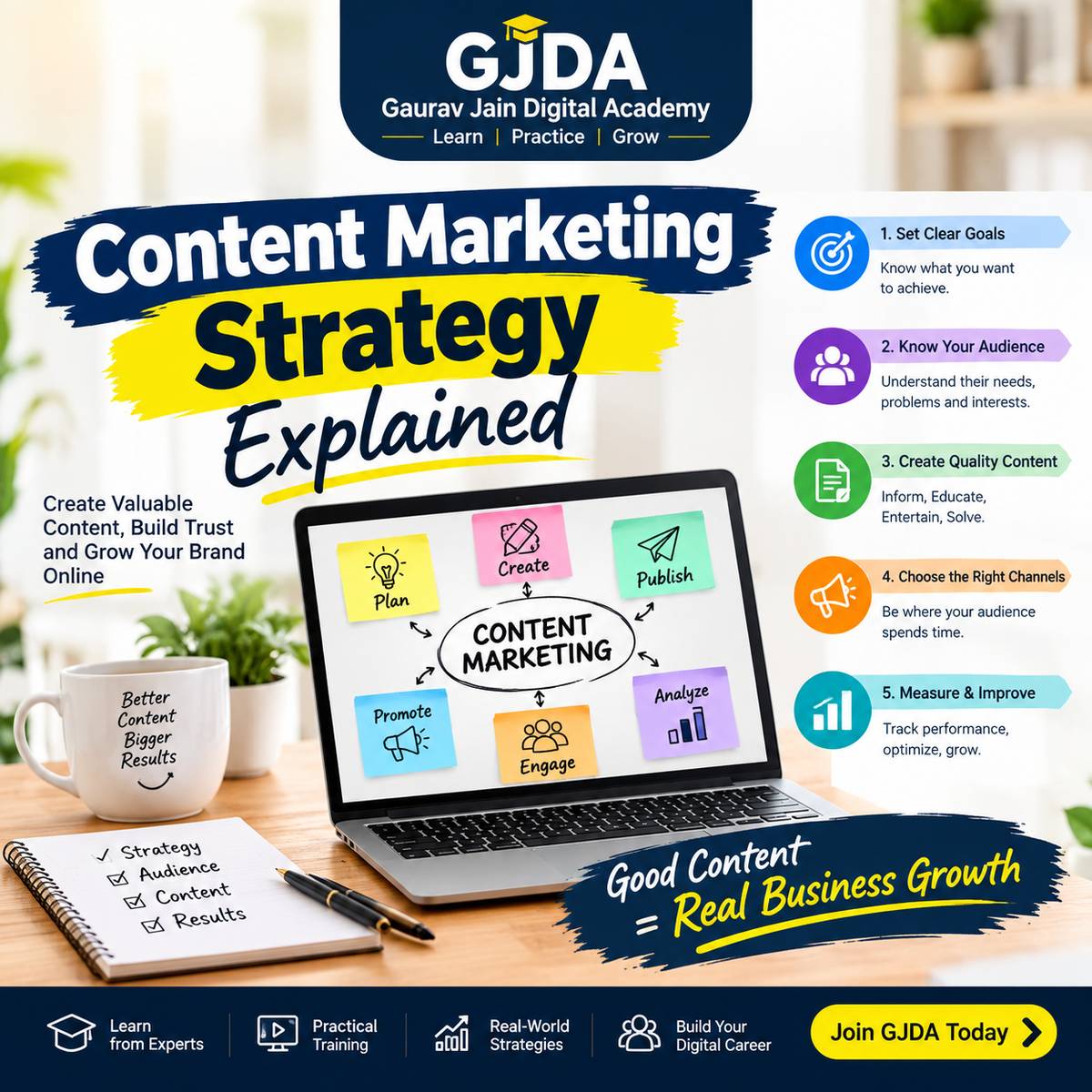
- Build a simple, written plan first. If you're missing that base, this complete guide to building a strategy covers goals, audience research, channels, and KPIs step by step.
- Test small before spending big. One video series, one chat flow, one email sequence, each for a month or two.
- Add something only you can add: your own data, your own observation, your own opinion. That's the part AI can't fake well.
- Review quarterly. Keep what worked, drop what didn't, and don't get sentimental.
On that last point, a caution. Quarterly reviews only make sense if you've given an experiment enough time. Some things (SEO especially) take longer than three months to show clear results, so "drop what didn't work" needs judgment, not a stopwatch.
Useful Tools to Know
Tool names change, so think in categories rather than brands. For search and content research, keyword and search-console type tools. For video, a basic phone editor is enough to start. For conversations, a business messaging platform with catalog features. For email and customer data, a simple email service with consent management. And for tracking, a free analytics setup plus a spreadsheet you actually update.
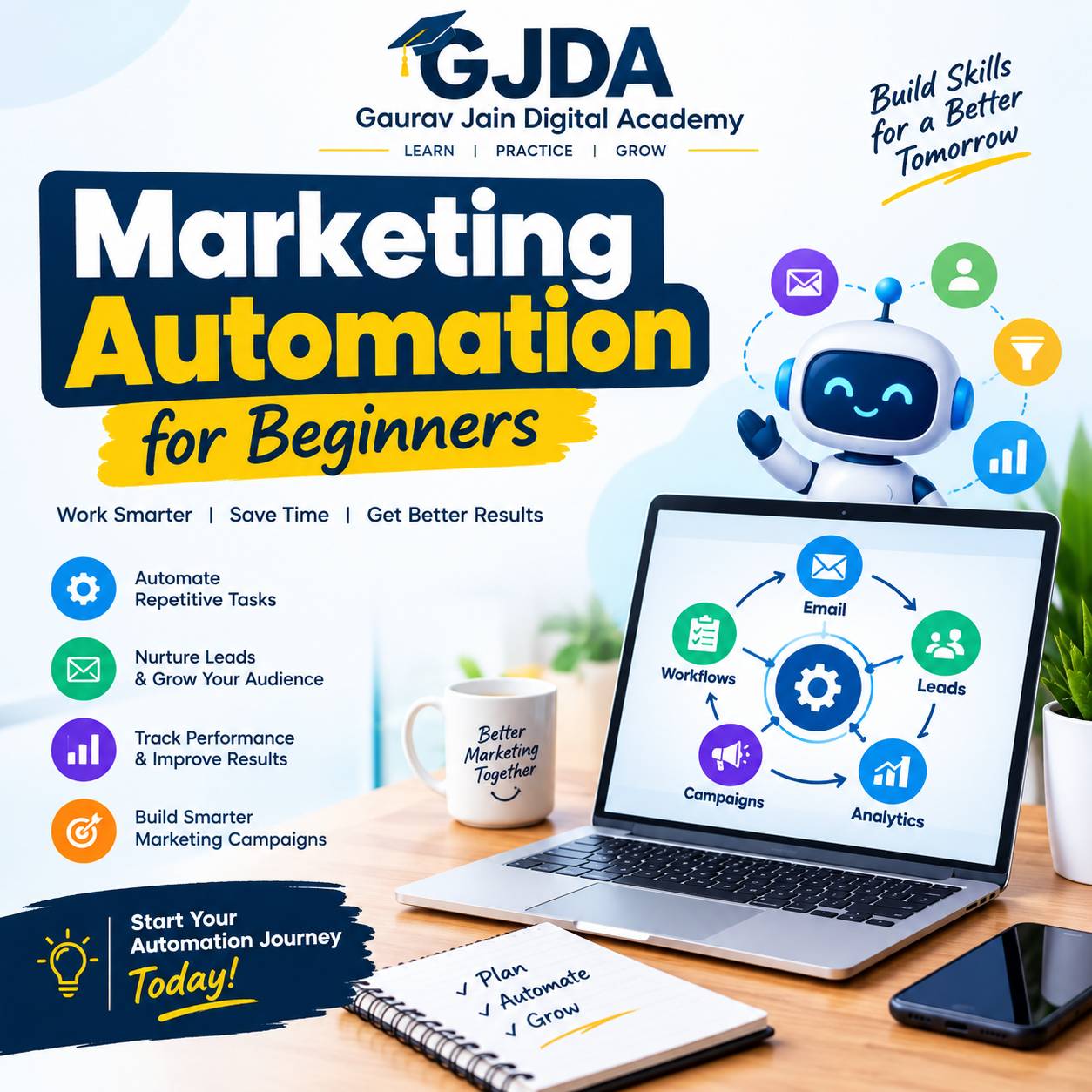
If repetitive follow-ups are eating your week, look at automation. Marketing automation for beginners is a gentle starting point, and I'd suggest automating only tasks you've already done manually enough times to understand them.
Career Opportunities
Demand is likely to stay strong for people who combine one deep skill with general marketing sense. Think content strategy, performance marketing, SEO, video production, marketing analytics, CRM and automation, and social media management with a community focus.
Does that mean every job is safe? No. Purely repetitive tasks (basic copy variations, simple reports) are the most exposed to automation. People who can interpret results, make decisions, and explain them to a client or boss are in a stronger position. If you're still working out how to start, a beginner's guide to learning digital marketing lays out a sensible order.
Real campaign examples also teach faster than theory. This social media marketing case study shows how strategy decisions play out in practice.
Practical Assignment: Build Your Own Five-Year Trend Plan
Give yourself an evening for this. You need a notebook or a spreadsheet, nothing else.
- Write down your business or the business you'd like to work for. One line.
- List where your customers currently find you. Be honest, including "mostly word of mouth."
- From the seven shifts above, circle the two that touch your customers most directly.
- For each circled trend, define one small experiment you can run for 60 days. Example: "Post four Hindi short videos a month and note how many inquiries mention them."
- Decide how you'll judge success before you start. A number, a date, a simple yes or no.
- Set a calendar reminder for day 60 and review what happened.
Don't aim for a perfect plan. A rough plan you actually run beats a polished one in a folder.
Frequently Asked Questions
Will AI replace digital marketers?
It will replace some tasks, and probably some roles built entirely around those tasks. It's less likely to replace people who set strategy, judge quality, and understand customers. Nobody can promise more than that.
Is SEO still worth learning if AI answers questions directly?
Yes, though the skill is shifting. Understanding what people ask, structuring clear answers, and building trustworthy content still matters, because AI systems draw on web content too. Treat SEO as "being the best source on a topic," not just "ranking a keyword."
Which skill should a beginner learn first?
It depends on your goal. For a job, pick one specialization (SEO, performance ads, or content) after learning the basics. For your own business, start with whichever channel your customers already use.
Is short video marketing only for young audiences?
No. Usage is wider than most business owners assume. Still, it won't suit every product. A firm selling industrial equipment may get more from detailed case documents and LinkedIn than from reels.
Do small businesses really need first-party data?
If you want repeat customers, yes, even in simple form. A consented phone or email list lets you reach people without paying for every single impression.
Are paid ads becoming useless?
No. They're getting more competitive and more dependent on good creative and clean data. Weak offers lose money faster, that's all.
How much should I spend on trying new trends?
There isn't one correct percentage. A cautious approach is to set aside a small, fixed slice of your marketing budget for experiments and protect the rest for what already works.
Is voice and visual search worth worrying about?
Keep an eye on it, but I wouldn't build a strategy around it yet for most small businesses. Clear business information, good images, and well-structured pages cover most of what it needs.
Can I learn all this without paying for a course?
You can learn a lot from free resources, official platform documentation, and practice. What a structured program adds is order, feedback, and accountability, which some people need and others don't.
How do I know if a "trend" is real or just hype?
Check whether customer behavior has actually changed, or whether only the marketing vocabulary has. If you can't point to a change in how real people search, buy, or ask questions, wait.
Conclusion
The next five years of digital marketing will reward people who stay curious without becoming impulsive. Watch customer behavior, run small experiments, own your data where you can, and keep adding the human element that automated content can't copy. Some of what I've described here will age badly, and that's normal. The habit of testing and adjusting won't.
If you'd like to see how a structured learning path is organized, you can look at our training center's curriculum, and you're welcome to explore the rest of our institute as well. Either way, start your two-trend experiment this month.